
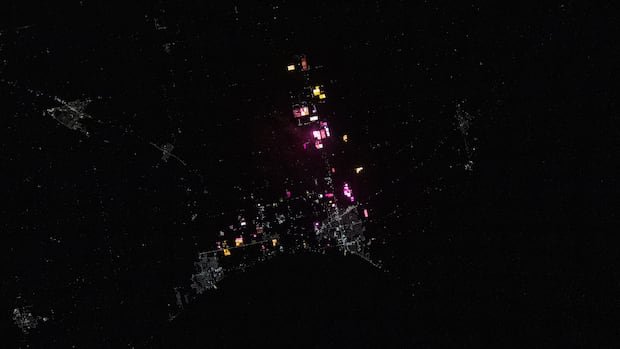

The vibrant glow of hot pink and canary-colored lights emanating from greenhouses in southwestern Ontario is so intense that it can be seen from space by astronauts. This transformation of the night sky is a result of the installation of thousands of lights in greenhouses in the region over the past decade, catering to vegetable and cannabis production. The glow, visible even from Michigan and the International Space Station, has sparked both admiration and concern, leading local communities to enforce bylaws restricting the brightness of greenhouse lights at night.
Richard Lee, the executive director of the Ontario Greenhouse Vegetable Growers, acknowledges that the rapid adoption of lighting technology posed challenges in addressing the perceived nuisances caused by the bright glow. Despite efforts to reduce light pollution with regulations, the colorful radiance remains visible in the region due to various factors, including exceptions within the rules and lunar cycles.
The surge in greenhouse construction in Kingsville and Leamington, as evidenced by satellite images, is attributed to factors like Canada’s legalization of marijuana and the utilization of lighting technology for year-round plant cultivation. The demand for fresh produce, especially during the disruptions of the COVID-19 pandemic, has further fueled the expansion of greenhouse operations in the region.
To mitigate the environmental impact of greenhouse lighting, bylaws in Kingsville and Leamington have been implemented to address light pollution concerns. These regulations, such as the installation of light-blocking curtains and restrictions on light emissions during specific hours, aim to balance agricultural productivity with environmental conservation efforts.
While enforcement measures have been taken to ensure compliance with the bylaws, challenges persist in achieving complete light abatement. Ongoing efforts involve collaboration between growers and authorities to find practical solutions that maintain both agricultural productivity and environmental sustainability. The adaptability of the human eye, weather conditions, and lunar brightness can influence the perception of greenhouse light emissions, highlighting the complexity of addressing light pollution from agricultural practices.