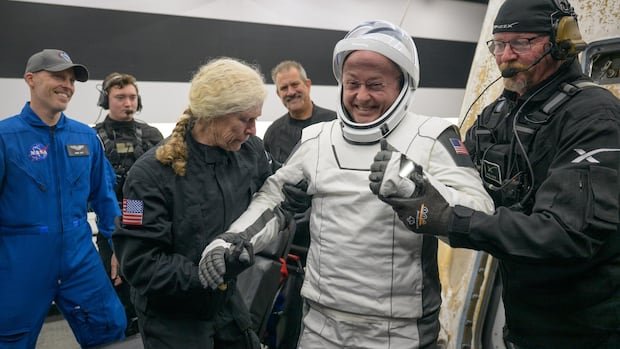

Astronaut well-being has been a focal point since the inception of space exploration. Various effects like motion sickness, disorientation, muscle weakening, and bone density reduction have impacted all individuals venturing beyond Earth’s confines.
NASA has developed treatments for many of these issues through medication and rigorous exercise during space missions. However, more severe health concerns could impede longer expeditions to the moon and Mars. Consequently, scientists are intensively researching potential health challenges for extended space travel and how to effectively manage them.
Although rare, significant medical incidents in space do occur. In January 2026, the International Space Station experienced its inaugural medical evacuation when astronaut Mike Finke encountered a non-life-threatening condition necessitating diagnosis and treatment on Earth. While NASA has not disclosed the specific cause for privacy reasons, Finke has confirmed his recovery and well-being.
Close calls in space are meticulously analyzed to enhance comprehension of how microgravity influences human health. For instance, a study by Simon Fraser University focused on blood clot formation in microgravity after a female astronaut onboard the space station in 2019 was found to have a clot in her neck.
The study revealed that blood clots formed in microgravity are more resilient compared to those formed on Earth. Subsequent research extended this investigation to males to identify potential sex differences in blood clotting under microgravity conditions.
Both Finke and the female astronaut underwent diagnosis using a portable ultrasound device, a standard practice for routine health checks in space. However, the limited equipment available onboard restricts the astronauts’ capacity to address emergent health issues.
Weightlessness in space can trigger blood clotting and vision impairments due to fluid redistribution in the body. These changes can lead to conditions like Space-Associated Neuro-Ocular Syndrome (SANS), which affects astronauts’ eyesight during extended space missions.
Moreover, injuries are common in space, with musculoskeletal issues frequently reported, primarily affecting astronauts’ hands. Although the International Space Station is equipped with essential medical tools and personnel, certain conditions necessitating surgical intervention require a return to Earth due to the challenges of performing surgery in a weightless environment.
Future missions to the moon and Mars pose additional challenges as timely medical assistance may not be readily available. To address this, NASA is devising Earth-Independent Medical Operations (EIMO) to enable astronauts to manage health issues autonomously during distant missions.
Preventing and monitoring potential health issues before space travel becomes crucial as humans venture farther and spend prolonged periods away from Earth. Despite precautionary measures, the risk of sudden medical emergencies or fatal injuries remains, prompting NASA to have contingency plans in place if such unfortunate incidents occur.
The hope is that such scenarios never materialize, emphasizing the criticality of ensuring astronauts’ well-being and self-sufficiency in space exploration endeavors.