
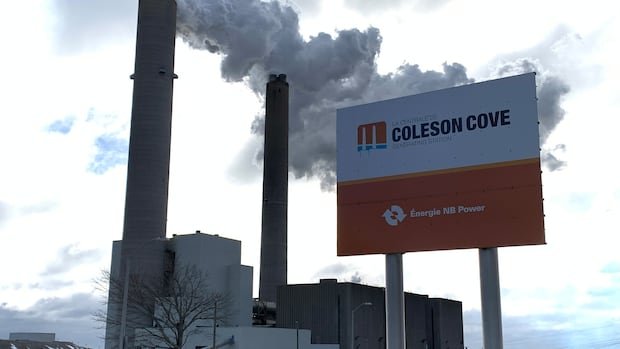

N.B. Power is currently facing an urgent need for significant repairs on the pollution control system at the Coleson Cove generating station. Phil Landry, acting vice-president of operations at N.B. Power, mentioned that they have been closely monitoring the system for a few years and have postponed costly repairs until it became essential.
The Coleson Cove facility operates three large boilers that burn bunker C oil, known for being one of the most expensive and dirtiest fuels used in New Brunswick for electricity generation. Prior to releasing exhaust smoke from burning bunker C oil, it must pass through a scrubber to eliminate sulphur dioxide, a significant contributor to acid rain.
According to Landry, corrosive ash accumulation in the steel structure between the boilers and the scrubber has led to its deterioration. Despite the system currently functioning as intended with only standard maintenance issues, Landry emphasized the necessity of making critical decisions moving forward.
The anticipated repair costs for 2024 are estimated to be approximately $90.6 million. Before proceeding with the repairs, N.B. Power is revisiting the idea of converting Coleson Cove from burning heavy fuel oil to natural gas. Landry highlighted that natural gas would pose fewer challenges compared to heavy fuel oil in terms of the scrubber system due to its lower sulphur dioxide emissions.
During Energy and Utilities board hearings, Brad Coady, N.B. Power’s chief commercial officer, mentioned that the utility is exploring the possibility of a natural gas conversion but has not committed to it yet. Coleson Cove, operational since 1976 and scheduled for retirement in 2040, is currently one of N.B. Power’s main energy sources despite its high costs and carbon emissions.
Clean air activist Gordon Dalzell noted improvements in the pollution control systems at Coleson Cove, reducing particulate and nitrous oxide emissions significantly. Dalzell acknowledged the potential benefits of a natural gas conversion in further reducing emissions, emphasizing the importance of utilizing renewable energy sources to minimize environmental impact.
Landry addressed the challenges of sourcing natural gas for a converted Coleson Cove, citing the need to evaluate the use of liquefied natural gas to ensure fuel availability. The fluctuating energy prices, particularly for liquefied natural gas, could influence the decision-making process regarding the plant conversion due to geopolitical factors like the U.S. and Israel-Iran conflict.
Reflecting on N.B. Power’s history of attempted changes at Coleson Cove, Landry mentioned past initiatives to switch fuels, including a failed Orimulsion conversion plan and experiments with different fuel mixes. The utility is now contemplating a potential shift to natural gas, with the final decision pending further evaluation and cost considerations.