
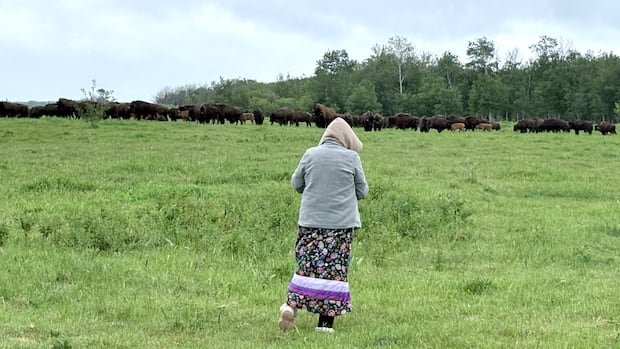

Michif language students from the Batoche region participated in a special naming ceremony with Métis leaders to welcome 16 new calves to the Batoche bison herd. These calves mark the first bison births in the area in nearly 150 years, as shared by Métis elders to students from St. Louis, Duck Lake, and Bellevue, Saskatchewan. The naming of these calves was a collaborative effort involving students from various schools across the province earlier this year.
In a significant partnership between Métis Nation—Saskatchewan (MN-S) and Parks Canada in 2023, 25 yearlings were relocated to Batoche from Grasslands National Park, with an additional 50 bison introduced last year. This initiative aims to reintroduce bison to Métis Nation-Saskatchewan lands around Batoche, enriching the cultural and educational experiences for the community.
The recent field trip provided a unique opportunity for students to engage in land-based education, fostering a deeper connection to Métis heritage. Darcy Lepowick, MN-S minister of environment, agriculture, lands, and resources, emphasized the importance of experiential learning, highlighting that witnessing the bison in their natural habitat enhances the students’ understanding and appreciation of Métis history and culture.
The chosen names for the bison reflect the diverse linguistic influences of Michif, incorporating elements from northern, heritage, and French dialects. Notable names include Chiraan (Northern Light), Toneur (Thunder), La ci flesh (Little Arrow), and Li pchi (The Little One). Among the named calves is Groos tet, meaning “Big Head,” a choice that delighted Samantha Campbell, a Grade 10 student at St. Louis Public School studying Michif language.
Following the naming ceremony, a group of students and onlookers ventured into the bison paddock to observe the herd up close, further immersing themselves in the cultural significance of the event. Angela Rancourt, a Michif language teacher and coordinator of the Michif early learning program, emphasized the emotional connection to the land and heritage, underscoring the importance of preserving and celebrating Métis traditions.
As the bison herd continues to grow, plans are in place to relocate some animals to establish new herds, ensuring the sustainability and expansion of bison populations within the province. Lepowick noted that while the current herd is nearing its capacity, the anticipation of more calf births in the upcoming spring will contribute to establishing nucleus herds for other Métis groups across the region.