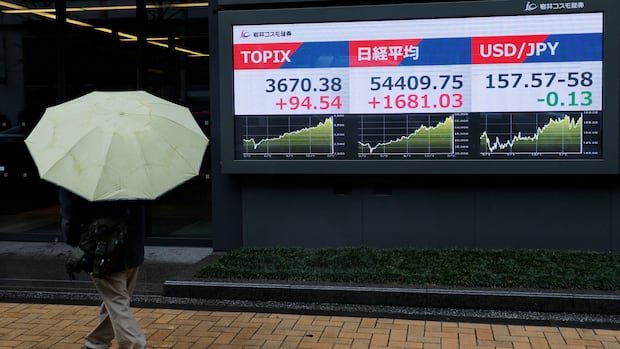

U.S. stock markets and oil prices remained stable on Tuesday amid anticipation for signals regarding the potential end of the conflict with Iran. The S&P 500 saw a 0.3% increase following recent volatile fluctuations caused by dramatic shifts in the oil market. By 12:30 p.m. ET, the Dow Jones Industrial Average had climbed by 210 points, or 0.4%, while the Nasdaq composite showed a 0.6% uptick.
Oil prices held relatively steady compared to the previous day, with concerns persisting over disruptions in the global oil and natural gas supply due to the ongoing conflict. The price of a barrel of Brent crude, the international standard, stood at $89.42 US, marking a 9.6% decrease from the previous settlement but with most of the decline occurring before the end of Monday’s trading session. Similarly, benchmark U.S. crude prices hovered around $84.64 US per barrel.
On Monday, oil prices experienced a significant drop from nearly $120 US per barrel, the highest level since 2022, following remarks by U.S. President Donald Trump suggesting progress in the conflict resolution. However, ambiguity surrounding the situation persisted as Trump’s subsequent comments lacked clarity, and Iran’s Revolutionary Guard indicated that Iran would determine the war’s conclusion.
Iran launched fresh attacks on Tuesday targeting Israel and Gulf Arab countries, maintaining pressure in the region amid the conflict initiated by Israel and the U.S. ten days earlier, leading to a surge in oil prices.
The uncertainty surrounding oil prices and the duration of the crisis remains a major concern. Hakan Kaya, a senior portfolio manager at Neuberger Berman, highlighted the binary nature of the current oil outlook, emphasizing the potential for a significant risk premium unwind if the Strait of Hormuz reopens, or conversely, a prolonged supply disruption if the strait remains closed.
The International Energy Agency plans to convene a meeting to discuss the possibility of member countries releasing oil reserves to alleviate price pressures. Prolonged high oil prices could strain household budgets amid existing inflationary pressures, while businesses may face increased costs for fuel and inventory maintenance.
Of particular concern is the Strait of Hormuz, a vital passage through which approximately 20% of the world’s oil supply transits daily. Threats from Iran to disrupt navigation through the strait have heightened worries about supply disruptions and escalating oil prices.