
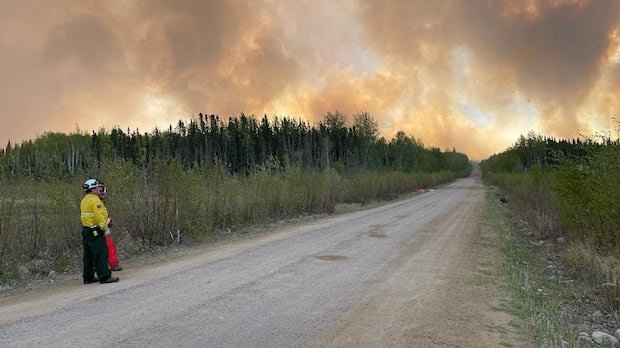

Harley Vliegenthart recalls his efforts to protect his community from a devastating wildfire. As a local volunteer firefighter, he witnessed the destruction caused by wildfires in Denare Beach, Saskatchewan last summer, which consumed half of the lakeside community. Vliegenthart, who lost his childhood home in the blaze, described the intense week as feeling much longer. Despite the approaching Wolf fire that encircled the community undetected, he remained on duty until ordered to evacuate.
The emotional aftermath of the wildfire took a toll on Vliegenthart and his community, with feelings of depression and hopelessness setting in after the crisis. Over 240 families in Denare Beach lost everything they had worked for all their lives, adding to the devastation.
The wildfires in Saskatchewan last year burned 2.9 million hectares of forest, displacing thousands and destroying over 450 homes in 25 locations across the province, according to the Saskatchewan Public Safety Agency (SPSA). Experts are cautioning that this year’s wildfire season could be equally severe.
Colin Laroque, an environmental science professor at the University of Saskatchewan, highlighted the dry fall and unusual winter conditions that have set the stage for potential wildfires. The province entered winter with low soil moisture levels, which, combined with freezing and thawing cycles, have impacted the snowpack moisture. Laroque emphasized the critical nature of the current conditions, warning that if spring brings high temperatures, the already dry ground may not absorb moisture effectively, increasing the risk of severe wildfires.
The potential for “zombie fires” smoldering underground during winter and resurfacing in spring adds to the wildfire threat. Laroque expressed concerns that the province’s wildfire budget may not be sufficient to address the challenges ahead in the upcoming wildfire season.
Finance Minister Jim Reiter noted that this year’s provincial budget maintains the status quo for wildfire preparedness and response. The budget includes a $20 million increase for the SPSA to enhance resources, with an additional water bomber added to the fleet. Last year’s wildfire response activities significantly impacted the budget, reflecting the unprecedented nature of the previous wildfire season.
Looking ahead, Laroque stressed that last year’s severe wildfires could become the new normal due to changes in land management practices. Eric Lamb, a plant sciences professor at the University of Saskatchewan, emphasized the need for proactive measures like prescribed burns to mitigate wildfire risks. Lamb highlighted the importance of prescribed fires to create resilient landscapes and reduce the impact of future wildfires.
Vliegenthart and his community are already taking steps to prepare for the future, including additional training for firefighting and investments in fire safety equipment. Recognizing the increasing risks posed by climate change, Vliegenthart emphasized the importance of collaboration and proactive measures to address the growing threat of wildfires in the region.