


Sources within the federal government have informed CBC News that the Liberal administration intends to transform the emerging Defence Investment Agency (DIA) into a Crown corporation, aiming to expedite military acquisitions.
This change could provide Ottawa significantly greater flexibility in managing defence procurement as a specialized commercial entity, rather than adhering to traditional government program structures.
The anonymous sources, who were not permitted to disclose information publicly, indicated that the Crown corporation would likely be accountable to an associate minister of defence to ensure transparency.
Established just over a year ago, the DIA has operated as a unique agency under Public Services and Procurement Canada. A legislative proposal aimed at granting the defence agency enhanced powers to circumvent the longstanding procurement system was introduced in the House of Commons in the spring but has yet to be approved.
-
First phase of Army restructuring creates division focused on defending Canada
-
Canada and the U.K. consider merging financial initiatives to rearm against Russia
However, Minister of Public Works Joël Lightbound is expected to introduce new legislation that would further advance the DIA towards independent Crown corporation status. The title of this proposed bill has been noted in documents from the House of Commons.
Many experts in defence agree that the primary benefit of converting the agency into a Crown corporation lies in its operational independence. Although specific details of the forthcoming legislation have not been disclosed, it is anticipated that the agency may establish its own board, CEO, corporate strategy, and workforce.
Decreased Bureaucracy
Philippe Lagassé, an expert in defence policy and procurement from Carleton University, remarked that this proposed change would be substantial.
“Transforming into a Crown corporation could streamline the bureaucratic processes entailing multiple departments and central agencies, particularly the federal Treasury Board,” Lagassé noted, citing another defence agency that operates independently.
“Drawing from the model of Defence Construction Canada, the DIA as a Crown corporation could serve as the contracting authority for the Department of National Defence and the Canadian Armed Forces, thereby reducing the number of parties involved.
“However, this could also result in fewer ministers having influence over significant projects that involve large sums of taxpayer money.”
For the Canadian Armed Forces, the appeal of partnering with a Crown corporation for equipment procurement lies in the possibility of quicker delivery of orders. Nevertheless, it will be crucial to ensure that the military’s technical specifications are satisfactorily met.
“The legislation and subsequent regulations could incorporate mechanisms to guarantee that technical requirements are a major consideration in procurement decisions,” Lagassé explained.
“However, if the DIA is also tasked with enhancing the defence industrial base and promoting sovereign capabilities, potential conflicts may arise.”
-
Analysis
No longer taboo, Canada’s defence industry steps into Europe’s spotlight
-
Canada wants into Britain’s rapid-response defence club
Given that Crown corporations operate with a degree of autonomy from the federal government, there are concerns surrounding accountability and transparency that will need to be addressed, according to Lagassé.
“There could be diminished internal oversight, but that remains a significant barrier to expediting the process,” he stated.
“Nonetheless, the DIA could commit to considerable transparency, with the CEO still able to present before parliamentary committees. Ministers would still be accountable for the corporation’s activities in Parliament, though they might not be as directly responsible and could use that to evade tough inquiries.”
Prime Minister Mark Carney emphasized the need for faster defence procurement as a key commitment during the 2025 election campaign.
When the initial bill to formally establish the DIA was introduced earlier this year, it granted the new agency extensive powers.
For years, the federal government has been able to invoke four exceptions to suspend the standard procurement process.
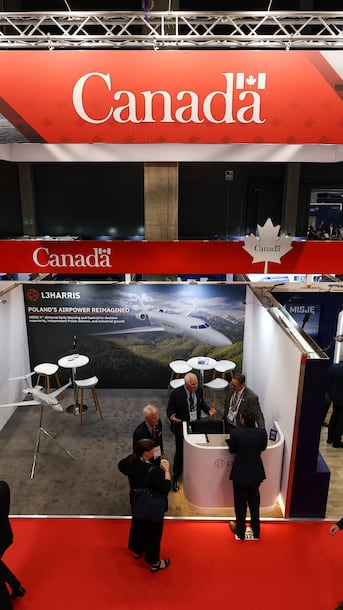
Canada is the ‘lead nation’ at this year’s International Defence Industry Exhibition in Poland, bringing the largest-ever delegation of defence companies to the event. The push is part of a broader federal effort to deepen ties with European allies and reduce Canada’s reliance on the United States.
This spring, the government suggested increasing the number of exceptions to as many as 14, including those related to national interest procurements. It also emphasized economic security as a fundamental aspect of the DIA’s mandate.
It remains uncertain how these initiatives will be reflected in the Crown corporation’s framework and whether it will possess even greater authority.
Defence Minister David McGuinty and Secretary of State for Defence Procurement Stephen Fuhr are slated to hold a media availability on Tuesday to respond to inquiries.