

On Tuesday, officials in Kenya announced the nation’s first case of imported Ebola from Congo, marking Kenya as the latest country to be impacted by the rapidly spreading outbreak.
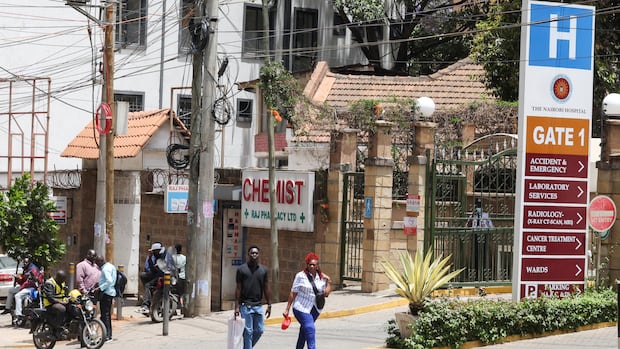
According to Health Minister Aden Duale, a Kenyan national who returned to the country on Saturday from Congo via Uganda was isolated and treated at Nairobi Hospital, where he tested positive for the Ebola virus and passed away late Monday.
Ebola is extremely infectious and transmits among humans through contact with bodily fluids such as blood, vomit, or semen, as well as through contaminated items like clothing and bedding.
The ongoing outbreak was declared in mid-May, following its spread in a remote area of eastern Congo. Government statistics indicate that there have been at least 8,400 cases, including over 4,000 fatalities, making it the fastest-spreading outbreak of the disease ever recorded.
As noted by the Kenya Medical Research Institute, Kenya has never previously experienced an outbreak of Ebola. Efforts are underway to trace dozens of contacts.
Minister Duale emphasized that Kenya is well-equipped to handle Ebola cases, having trained nearly 5,000 healthcare workers nationwide on prevention and management strategies.
With this case, Kenya becomes the fourth nation to report an Ebola infection during the current outbreak.
Initiation of flight passenger tracing
Uganda has documented 20 cases, while France has reported one. Prior to the confirmation of Kenya’s case, there had been no active infections outside Congo since Uganda declared its outbreak over in late August.
Health officials in Kenya have heightened alertness at border entry points and are vigilant for potential additional cases.

Kenya’s Health Minister Aden Duale holds a news conference in Nairobi on Tuesday, announcing the first case of Ebola in the country. (Monicah Mwangi/Reuters)
Duale mentioned that 28 contacts, which include family members and healthcare workers who attended to the patient, have been identified. Additionally, efforts are underway to trace 23 passengers who were on the same flight from Uganda.
The patient had lived in Congo for the past seven years and developed symptoms about a month prior. He received treatment at various hospitals before traveling by road to Kampala, where he boarded a flight to Nairobi, arriving on Saturday afternoon.
Contacts will remain in isolation for a period of 21 days and will be released only after testing negative for the virus, according to Patrick Amoth, the director of the Health Ministry.

The patient was subsequently transported to Nairobi Hospital by his relatives in a private vehicle, where he was immediately isolated. He is scheduled to be buried within 24 hours, following established public safety guidelines.
The minister reported that since May, Kenya has tested 267 samples across five laboratories before identifying this initial case.
Congo’s outbreaks ‘like fighting a megafire’
In Congo, where the outbreak has affected seven provinces, conditions remain challenging. Health teams have encountered violence, misinformation regarding the virus, reluctance among locals to report symptoms, and rebel activity that has obstructed access to treatment facilities.
-
Congo’s Ebola outbreak surpasses 4,000 deaths amid violence and mistrust
-
Suspected Ebola case at Montreal hospital turns out to be a false alarm
While the rate of new cases has decreased in Ituri province, the outbreak continues to expand in emerging hotspots in North Kivu and South Kivu provinces.
“It feels like battling a megafire. Multiple outbreaks are occurring simultaneously, each with different intensities and in varying locations,” stated Stephanie Hoffmann from Doctors Without Borders.
The World Health Organization has cautioned that this outbreak may exceed the deadliest Ebola outbreak recorded in history, which occurred more than a decade ago and claimed approximately 11,000 lives in West Africa.