
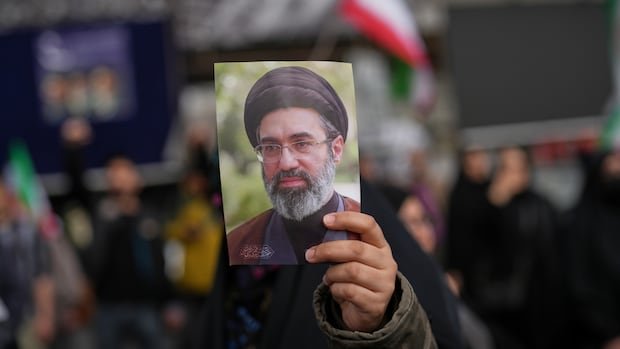

Iran’s supreme leader issued a stern warning on Saturday, cautioning the United States about facing “unforgettable lessons” if it continues its attacks on the Islamic Republic. The leader also criticized President Donald Trump’s actions, labeling his signature as “worthless and invalid.” This statement followed Tehran’s decision to suspend its commitments to an interim deal signed approximately one month ago.
Mojtaba Khamenei, whose statement had not been seen since the conflict began, conveyed his message through state television after both the United States and Iran engaged in strikes targeting infrastructure and military installations. Khamenei emphasized that Iran and its regional allies, referred to as the “Axis of Resistance,” are prepared to teach these “lessons” to those involved.
The ongoing conflict in the region, particularly around the Strait of Hormuz, has intensified, focusing on control of this crucial waterway responsible for a significant portion of global oil transportation. The recent strikes have impacted civilians and essential services, including desalination plants crucial for providing drinking water, raising concerns about the global economy.
The U.S. Central Command reported a series of strikes targeting surveillance sites, military logistics infrastructure, underground weapons storage, and maritime capabilities. Iran responded by stating that it would no longer implement its commitments under the previously signed deal.
In a separate incident, the U.S. military confirmed the first American troop casualties due to direct Iranian fire since the conflict began. Two service members were killed, and another was reported missing following an attack on a base in Jordan. The casualties occurred during defense operations against Iranian ballistic missile and drone attacks.
Iran’s strikes caused significant damage in Kuwait, hitting a water desalination plant and an oil facility. The attacks resulted in injuries and fires, prompting disruptions to power generation units and flight schedules. Additionally, neighboring countries like Iraq, Jordan, Bahrain, and Saudi Arabia reported intercepting Iranian missiles and drones, with accusations of war crimes leveled against Iran.
U.S. airstrikes targeted key infrastructure in Iran, including electricity and desalination plants in Hormozgan province. These strikes disrupted water supplies to thousands of people and damaged critical transportation routes, impacting the region’s stability and resources. Iran condemned the attacks on its power infrastructure and warned countries hosting U.S. forces to be prepared for potential responses.
Iran’s control over the vital Strait of Hormuz has become a focal point in the conflict, affecting global oil prices and shipping routes. The U.S. aims to pressure Iran into compliance by targeting its power stations and imposing naval blockades on Iranian ports. As tensions escalate, there are growing concerns about the impact on regional stability and the potential for prolonged conflict in the Middle East.