
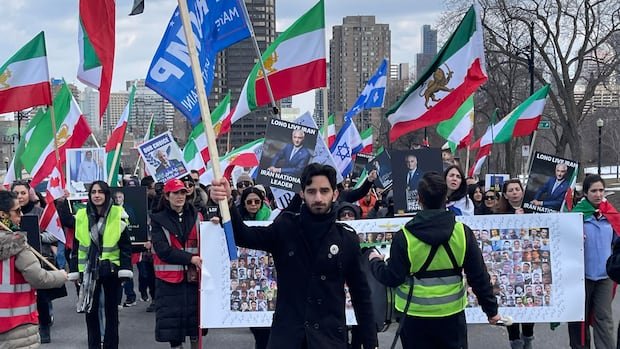

Upon the demise of Iran’s Supreme Leader Ayatollah Ali Khamenei in a joint U.S. and Israel attack on Feb. 28, numerous Iranian Quebecers celebrated publicly. Six weeks later, the ongoing conflict involving the United States, Israel, and Iran is eliciting varied responses from the diaspora.
Atena Barforoushi, an Iranian resident of Montreal, expressed relief at the recent two-week ceasefire. Although she had not supported the war, she found solace in Khamenei’s demise. However, she now contemplates the potential repercussions of the leader’s death, noting that the ruling regime may have fortified its position.
While some experts suggest that Iran holds the upper hand due to its increased control over the Strait of Hormuz since the conflict’s inception, Khashayar Hoseinzad disagrees. He believes that the U.S. and Israel have effectively weakened the regime’s military capabilities.
Hoseinzad, a 26-year-old Montrealer who left Iran at 17, remains skeptical about the ceasefire’s impact on negotiation outcomes. His predictions align with the recent developments following the weekend negotiations.
Maryam Dayani, a 33-year-old Montreal resident, holds a grim view of the ceasefire’s potential repercussions, fearing that it could lead to further militarization, including missile infrastructure development and continued nuclear programs in Iran. She also expressed concerns about the regime’s use of the ceasefire to execute dissidents.
The internet blackout in Iran, now in its 45th day, has severed communication channels for Iranians abroad, heightening worries about the safety of their families amid the ongoing conflict. Vahid Yucesoy, an Iranian political expert, underscores the legitimacy of these safety concerns, highlighting the regime’s historical suppression of internal dissent.
The nationwide protests in Iran, triggered by economic woes and demands for political reform, have faced violent crackdowns, resulting in casualties among protesters. Hoseinzad’s cousin was among those killed during the demonstrations.
Hoseinzad has been actively participating in Montreal rallies advocating for regime change in Iran, emphasizing the plight of political prisoners and the need for international support. However, despite the diaspora’s efforts, experts like James Devine remain skeptical about the likelihood of a successful regime change due to the lack of organized opposition within Iran.
The political landscape within the Iranian diaspora reflects a diversity of opinions, with varying levels of support for the U.S. and Israel intervention. Yucesoy notes a growing skepticism among Iranians regarding their stance on the conflict, as fears of escalating violence loom large.
U.S. President Donald Trump’s aggressive rhetoric towards Iran has stirred global unease, with some Iranians expressing concerns over the potential consequences of such inflammatory remarks. However, there are segments within the diaspora, including Dayani, who continue to support Trump and his policies, viewing him as a beacon of hope for Iran’s future.
Hoseinzad remains resolute in his belief that the ongoing conflict, despite its human toll and infrastructural damage, represents a necessary step towards potential liberation for Iranians. He acknowledges that true change will ultimately stem from the collective efforts of the Iranian people.