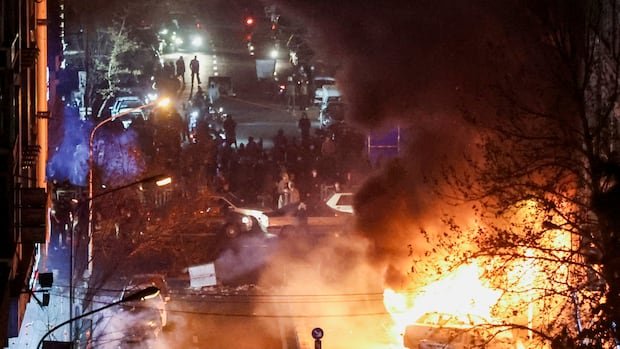

The death toll from the recent protests in Iran has surged to over 2,500 individuals, according to activists. Iranians regained the ability to make international calls after a communication blackout imposed by authorities. This level of violence in connection with protests has not been witnessed in Iran for many years.
The Human Rights Activists News Agency (HRANA) based in the U.S. reported that 2,571 people have died, with 2,403 being protesters and 147 government-affiliated individuals. Tragically, twelve children and nine civilians not involved in the protests also lost their lives. Additionally, more than 18,100 people have been detained during the two weeks of unrest.
While the exact figures have not been confirmed by Iranian authorities, state television acknowledged a high death toll, mentioning “a lot of martyrs.” The situation is challenging to assess due to the internet shutdown in Iran, making it difficult to monitor the protests from afar.
In the midst of the turmoil, U.S. President Donald Trump encouraged Iranian protesters to persist, stating that he had halted meetings with Iranian officials until the violence against protesters ceases. However, he later mentioned that his administration needed precise information on the casualties before taking further action.
The protests have led to the burning of banks and government offices, with witnesses reporting a heavy security presence in Tehran. Anti-riot police and members of the Revolutionary Guard’s Basij force were seen patrolling the streets, while several banks struggled to operate without internet access.
Despite the unrest, some shops remained open in Tehran, although the Grand Bazaar witnessed low foot traffic. Concerns linger about a potential military strike by the U.S., with many Iranians expressing apprehension about the situation. Security forces were reportedly searching for Starlink terminals in apartment buildings, and clashes with plainclothes security officials were observed on the streets.
Amidst the escalating tensions, President Trump announced plans for tariffs on countries conducting business with Iran. China strongly opposed unilateral sanctions and emphasized the need for dialogue to resolve conflicts. European nations condemned the crackdown on protesters, with some considering new economic sanctions against Iran.