
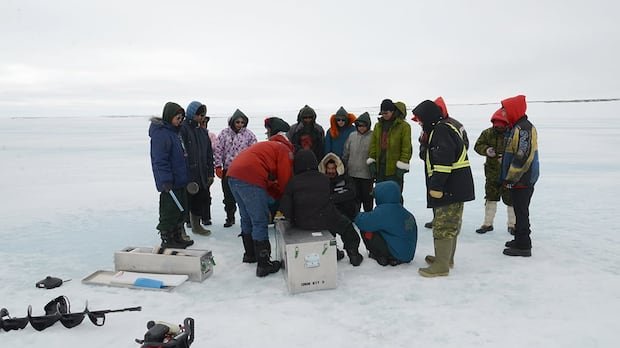

Candice Sudlovenick finds fulfillment in her role as an outreach programs manager at SIKU. Over a decade ago, she engaged with Ikaarvik as a young individual and attributes this experience to her discovery of joy in research. Reflecting on her time with Ikaarvik, Sudlovenick expressed that it was a transformative and empowering experience that highlighted the value of her voice being heard.
A recent article in Arctic Science, co-authored by Danielle Nowosad, a postdoctoral fellow at the University of Calgary of Métis descent, delves into the methods of Inuit leadership in research. Nowosad emphasized the increasing emphasis in Canada on including Indigenous perspectives and knowledge within research endeavors.
Ikaarvik was established by a group of Inuit youth who completed the Environmental Technology Program at Nunavut Arctic College in Pond Inlet back in 2010. The organization aims to bridge the gap between Inuit knowledge and scientific research, preparing Inuit youth for careers in this interdisciplinary field.
Sudlovenick highlighted the historical challenges in research relationships with communities, noting the importance of recognizing Inuit contributions beyond traditional roles. Nowosad echoed this sentiment, emphasizing the long-standing efforts of Inuit communities to enhance their involvement in research activities.
Despite progress in fostering collaboration, both Nowosad and Sudlovenick acknowledged persistent challenges. They noted that the timelines and priorities of academic institutions and funding bodies often clash with the slower pace required for meaningful community engagement in research projects.
With the Arctic region experiencing accelerated climate change, the integration of local knowledge into research is gaining significance. Sudlovenick stressed the importance of valuing Indigenous knowledge on par with Western science to empower youth in northern communities. As younger generations navigate a world that blends technology with traditional wisdom, the divide between Western science and Inuit knowledge may continue to diminish, paving the way for a more integrated approach to Arctic research.