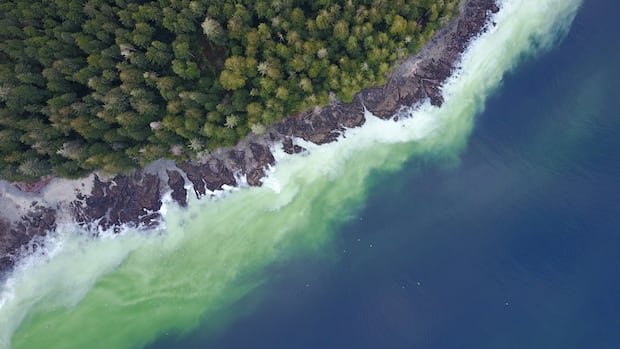

Ryan Cutler observed the foamy appearance of the ocean from his residence near Salmon Beach on the western coast of Vancouver Island last week, signaling the beginning of the herring spawn. This natural phenomenon, as Cutler noted, is a truly spectacular event to witness. With the use of his drone, Cutler captured the distinctive foamy, milky blue-green water that indicates the herring’s gathering for reproduction in the shallow coastal bays.
The herring spawn is a significant period for Vancouver Island and the South Coast, symbolizing the onset of spring and serving as a time for coastal First Nations to gather food. Conservationists also recognize its importance as they monitor the declining numbers of these small, oily fish due to overfishing in recent decades.
Herring, a vital species, congregate in large groups during spawning season. Females deposit eggs on kelp and eelgrass, while males release milt, resulting in the milky appearance of the water. Cutler mentioned that the signs of staging, indicating the herring’s preparation for spawning, were evident in the weeks leading up to the event, accompanied by the presence of sea lions, eagles, and humpback whales.
Nick Chowdhury, president of the Island Marine Aquatic Working Group, highlighted the cultural significance of the herring spawn for coastal First Nations, representing a time of seasonal transition and food gathering. Chowdhury emphasized the importance of tracking the spawn locations annually to assess fish stocks and observe potential returns to previously inactive areas.
Shirley Louie, a seasoned fisher and member of the Stz’uminus First Nation, delved into learning about herring after being involved in a documentary project with the Q’ul-lhanumutsun Aquatic Resources Society. This society, dedicated to aquatic resource management for six coast Salish First Nations, sought Louie’s assistance in cleaning herring, leading her to explore traditional methods of catching and preparing the fish.
The ongoing monitoring of the herring spawn through the Island Marine Aquatic Working Group’s platform provides valuable insights into stock management and fishing quotas, promoting sustainable practices and conservation efforts. Louie expressed her enthusiasm for preserving traditional foods and practices, emphasizing the importance of reconnecting with cultural heritage through activities like smoking and frying herring.