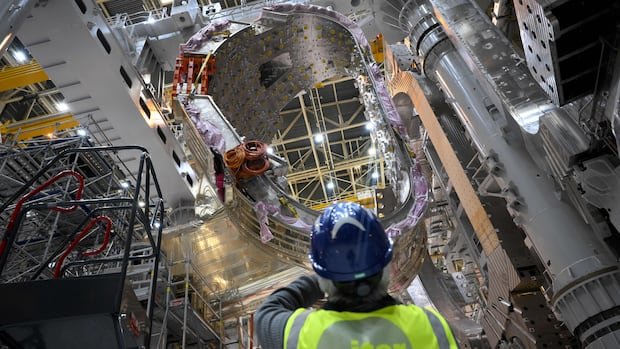

Recent achievements in nuclear fusion by General Fusion in Canada and China’s EAST reactor have sparked excitement about the potential of this clean energy source to meet the increasing demand for power driven by AI and electrification. The emergence of new fusion startups globally has attracted significant private investments.
Nuclear fusion, a long-studied method of producing safe and abundant energy, involves the merging of nuclei from two atoms to form a heavier element and release substantial energy. Unlike traditional nuclear reactors that generate radioactive waste, fusion reactions using hydrogen, available in water, do not produce radioactive byproducts. Despite the promise, commercial fusion reactors are not yet operational.
China’s EAST reactor achieved a significant milestone by maintaining stable plasma at densities surpassing previous limits, potentially paving the way for smaller and more affordable fusion reactors in the future. General Fusion’s breakthrough in neutron production has also garnered attention, although it is specific to their technology. With global interest in fusion growing, new investments and advancements indicate a potential shift towards fusion energy in the 2030s.
Challenges remain, including the need for more energy-efficient fusion reactions and durable materials to withstand the extreme conditions. While fusion power plants are still in development, the journey towards sustainable fusion energy continues, with Canada playing a vital role in supplying tritium and technology for fusion projects worldwide. The focus now is on reducing costs and enhancing the efficiency of fusion reactors to make them economically competitive with other clean energy sources.