

Voters in Florida are considering the elimination of residential property taxes, and the state’s governor has proposed a way to address the significant revenue shortfall: by increasing taxes on Canadians.
Canadians who possess property in Florida view the potential for increased taxes as yet another affront in a series of grievances since U.S. President Donald Trump resumed office last year with a notably anti-Canada stance.
Governor Ron DeSantis, a Republican, has criticized property taxes, which are essential for funding local governments and their services—such as law enforcement, fire services, emergency medical services, disaster preparedness, and mosquito control—comparing them to a modern form of feudalism, where homeowners must “pay the government simply for the privilege of using their own property.”
To address this issue, DeSantis is advocating for Amendment 3, a ballot proposal developed by his Republican colleagues in the state legislature, which will be presented to voters in the upcoming midterm elections.
If approved, those who qualify as “homesteaders” in Florida, or permanent residents, will benefit from a substantial increase in an existing property tax exemption.
Every Floridian with a primary residence valued at $250,000 or less—approximately 60% of all homesteaders, according to the governor’s office, although that statistic has been contested—would pay no property taxes, while those with homes valued above this threshold would see their tax bills significantly reduced. The measure also calls for the eventual abolition of homesteader property taxes.
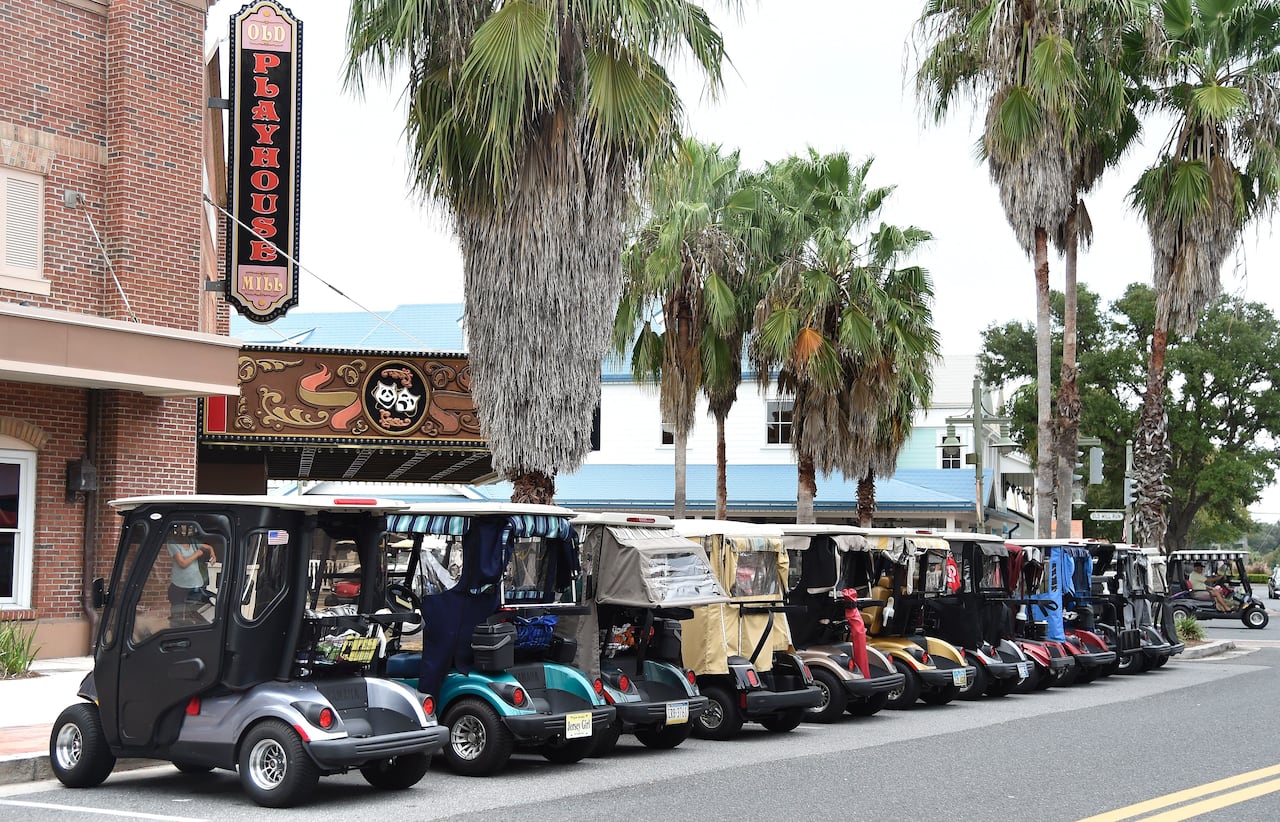
Golf carts line the street of a retirement community outside of Orlando, Fla. Florida permanent residents could see a dramatic decrease in property taxes if a ballot measure passes. (Rhona Wise/Getty Images)
This proposed amendment requires a 60% supermajority to pass, and at least one recent poll indicates it is likely to achieve that threshold.
State economists estimate that this initiative would result in an annual loss of approximately $12 billion, compelling local and county governments that rely on these tax revenues to make significant budget cuts, seek alternative revenue sources, or both.
This scenario could lead to higher costs for the Canadians who own an estimated $60 billion worth of property in Florida. DeSantis has explicitly referred to them as a resource to help bridge anticipated budget deficits.
“Our focus should be on Florida residents, particularly our homesteaded homeowners, and we need to direct relief to them,” DeSantis stated during a news conference last year while advocating for lower property taxes instead of a reduction in sales tax.
“I want Canadian and Brazilian tourists to contribute to the state’s finances, allowing Florida residents to pay lower taxes. I’m not interested in giving Canadians a tax break.”
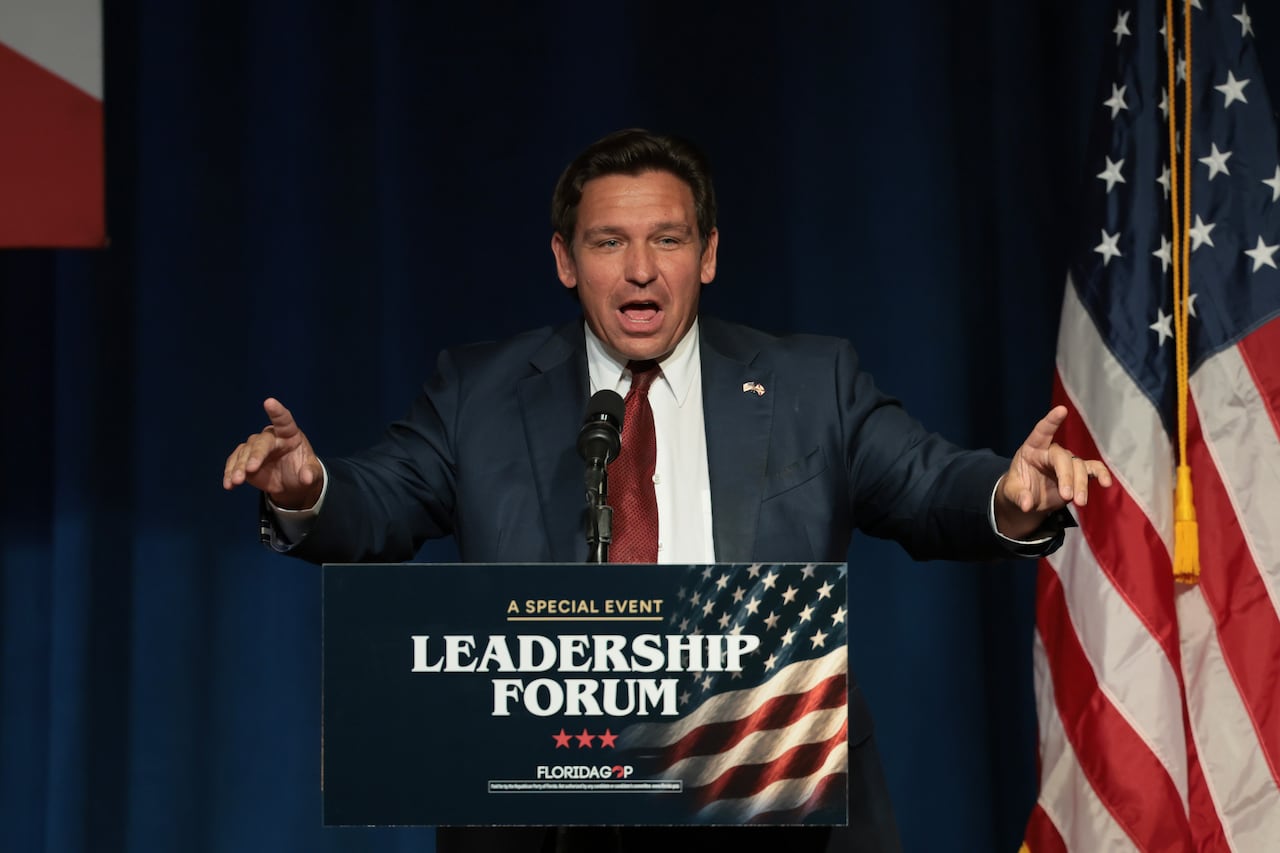
Florida Gov. Ron DeSantis speaks in Tampa, Fla. DeSantis is pushing a ballot measure to scrap property taxes for Florida residents and has said Canadian snowbirds can make up for some of the lost revenue. (Joe Raedle/Getty Images)
In a June interview with Fox Business, DeSantis acknowledged that while revenue from homesteader property taxes would dramatically decrease if the measure is approved, Canadian property owners would not benefit from this relief, which could help local governments financially.
“They tax non-homesteaded properties: residential, Airbnb, Canadian snowbirds, commercial. That’s a substantial amount of money for them,” DeSantis remarked regarding local and county governments.
While providing tax relief for Floridians, the ballot measure also stipulates that the assessed value of non-homesteaded properties—owned by Canadians or other non-residents—can rise by up to 5% annually, gradually increasing the revenue local governments can generate.
“They will start receiving more revenue from existing taxes without needing to impose new taxes, leading to a very stable situation in the near future,” DeSantis predicted.
Discontent Among Snowbirds
DeSantis has frequently made jabs at Canada, including its consistently underperforming hockey teams. He initially ridiculed the travel boycott stemming from trade disputes, doubting its impact, only to witness a significant decline in Canadian visitors reported by his state tourism bureau last year.
Some Canadians who have established seasonal residences in Florida are growing weary of the ongoing mockery.

Canadian Glenn McGill has wintered in North Fort Myers, Fla., for the last 15 years. He’s put his home up for sale after more than a year of U.S. President Donald Trump’s taunts and a threat to squeeze more property tax money out of snowbirds. (Submitted by Glenn McGill)
Glenn McGill from Wiarton, Ontario, has been spending winters in North Fort Myers, Florida, a community once filled with fellow Canadian sun-seekers, for the past 15 years.
However, following Trump’s second election, he describes a “stampede” of Canadians leaving the park that he and his wife, Deb, considered a second home.
He notes that only four Canadians remain in the once-thriving retirement community, a stark contrast to the number present when he first began visiting.
McGill mentioned that DeSantis’s plan to rely on Canadians to compensate for lost property tax revenue will only push more of them away, including himself—he has listed his home for sale.
“They’re a greedy bunch of SOBs,” McGill remarked in an interview with CBC News. “They want to drive Canadians out.”
“Those who are well-off don’t care, but we’re not wealthy; we’re not destitute—we can enjoy the Florida lifestyle comfortably, but having to pay additional taxes would be a burden,” he stated.
“And I’m done with this political discourse surrounding Trump.”
With so many Canadians departing or choosing to stay away, McGill notes that selling a home in Florida has become challenging.
“The market is pretty stagnant,” he lamented. “It’s listed, but hasn’t sold yet.”
Canadians constitute the majority of foreign property purchasers in regions along Florida’s Gulf Coast.
Data from Realtor.com indicates that Canadians make up over 70% of international demand in the Cape Coral metropolitan area, which encompasses McGill’s community.
Deb McGill and her husband Glenn say the political climate has changed dramatically in Florida since the onset of Trump 2.0. They are trying to sell their property in North Fort Myers, Fla. (Submitted by Glenn McGill)
Furthermore, with Canadian sales not approaching pre-trade war levels, the firm indicates that local sellers are experiencing “real pricing pressure,” as properties are remaining on the market longer than the national average.
Areas in Florida that have traditionally drawn significant Canadian interest are expected to see the most substantial decline in home prices this year, according to projections from the firm.
Edie Ousley, a spokesperson for Vote No on 3, a group opposing the property tax ballot proposal, foresees additional disruptions in the housing market should a wave of new Canadian-owned homes be listed if this tax change is implemented.
“Honestly, it wouldn’t surprise me if there’s a mass exodus of Canadians—they’re going to be significantly impacted,” Ousley stated in an interview.
“Amendment 3 is a disaster. It’s detrimental for Floridians and for winter visitors. Canadian snowbirds will bear the brunt of additional taxes—this is a tax shift, not true tax relief,” she emphasized.
Consequences for All
Ousley pointed out that a dwindling Canadian population cannot simply replace the losses incurred from the elimination of homestead taxes.
Numerous municipalities are already warning that a rapid decline in their tax base could severely affect public services, particularly law enforcement and emergency response times.
“Everyone will suffer from the cuts,” she remarked.
John May from Ottawa sold his Key West, Florida, condo after becoming frustrated with people he believed to be friends echoing Trump’s negative sentiments about Canada.
He described feeling like he was submerged in “a sea of ignorance,” with misconceptions about his country being rampant.
“Trump would say something ridiculous, like Canada being the 51st state, and they would laugh, which made me lose all respect for them,” May reflected in an interview.
“Then you start avoiding people because you know what the conversation will entail. Trying to engage in a logical discussion with a Trump supporter is futile.”
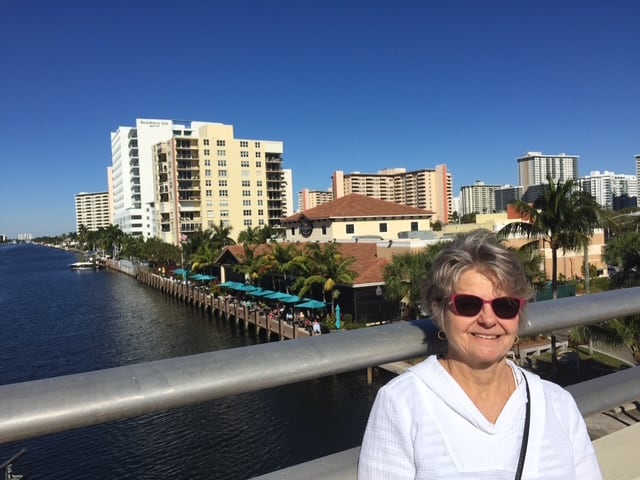
Canadian Jo-Ann Rowe wintered in Fort Lauderdale, Fla., but when her American friends started making jokes about Canada and its people, she felt she had to leave. Rowe now spends her time in Puerto Vallarta, Mexico. (Submitted by Jo-Ann Rowe)
Jo-Ann Rowe, a Canadian who had been wintering in Fort Lauderdale for years without issues before Trump’s return, experienced similar sentiments.
“The 51st state joke was amusing to my American friends, but I found it disrespectful,” she noted.
Rowe has since relocated to a rental in Puerto Vallarta, Mexico. “It felt wholly disrespectful. I couldn’t endure it any longer; this was my way of taking a stand,” she explained.
Lilly White from Almonte, Ontario, spent the last 25 years visiting Tarpon Springs, Florida, near Tampa, and then Flagler Beach on the opposite side of the state to escape the harsh Canadian winters.
White fondly recalls her time there but states that the atmosphere drastically changed during the Trump 2.0 period, prompting her departure.
“It’s not that we dislike it. We simply feel uncomfortable now. We will always cherish the U.S. as our neighbors and friends. That’s a choice we can make, but we also opt not to engage in the disturbing dynamics currently unfolding,” she stated in an interview.
“I have no interest in going down that rabbit hole.”

Lilly White of Almonte, Ont., spent 25 years in Florida but she had to take a step back from the state in the current political climate. She says a possible ballot measure to lean on Canadians for more property tax revenue is unfair. (Submitted by Lilly White)
White expressed that any initiative to extract more property taxes from Canadians is unjust to those who have significantly contributed to the state’s economy over the years.
Many small businesses that depend on the influx of Canadian snowbirds are undoubtedly suffering as visitor numbers dwindle amid the growing tensions between the two nations, she remarked.
Canadians remain the largest single group of international tourists to Florida, and data indicates that the number of trips decreased by 20% during the peak winter season this year.
“I can’t fathom the losses businesses are incurring. I know many friends who are no longer visiting, and we were significant spenders,” she said.