
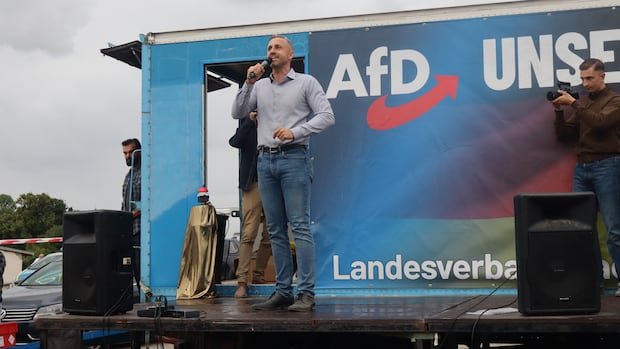

Thousands gathered in the serene town of Quedlinburg in eastern Germany on a sunny August day to listen to a prominent far-right figure discuss the nation’s future. Many arrived on their Simson motorcycles, a symbol associated with the Alternative for Germany (AfD) party, to meet Ulrich Siegmund, the AfD’s candidate for leading Saxony-Anhalt, an eastern state.
With the AfD surging in popularity and potentially poised to secure power in a regional election, experts foresee the party gaining significant influence over state resources, particularly in education. The party aims to implement initiatives such as segregating classrooms for refugees, fostering ties with Russia through student exchange programs, and emphasizing patriotism by shifting focus away from Germany’s Nazi history.
Among the attendees at the gathering, 17-year-old Luca Stemmler expressed admiration for Siegmund, calling him an idol who speaks from the heart. Meanwhile, across from the motorcycle rally, counter-protesters waved rainbow flags and sang songs in solidarity against the AfD, fearing potential threats to human rights and the democratic order established post-World War II.
The AfD’s rise to power in Saxony-Anhalt could be facilitated by the refusal of major political parties to collaborate with extremist groups, a strategy known as “the firewall.” Leading in opinion polls in Saxony-Anhalt at 42%, the AfD could secure a significant portion of the vote, potentially granting them influence in the state government. The party also leads national polls at 28% and gained significant seats in the 2025 federal election.
Originally founded as an anti-Euro party in 2013, the AfD shifted its focus to migration issues in 2015 in response to Chancellor Merkel’s refugee policies. The party advocates for concepts like “remigration” and plans to restrict immigration from certain non-EU countries, establish deportation centers, and create separate educational spaces for refugee children.
As the prospect of the AfD assuming power looms, concerns have been raised about the party’s far-right ideology and ties to extremist movements. Critics worry about the party’s potential influence on domestic intelligence services and its connections to Russia, as outlined in the AfD’s government manifesto emphasizing strong economic and cultural relations with the country.
The AfD’s popularity stems from a variety of factors, including dissatisfaction with mainstream political parties, economic instability, and international conflicts. The party has also garnered support from external figures like U.S. Vice President JD Vance and entrepreneur Elon Musk, further boosting its profile.
If successful in the upcoming election, the AfD’s impact may extend beyond Saxony-Anhalt, potentially influencing federal legislative decisions through representation in the Bundesrat. While Germany’s robust constitution could pose challenges to sweeping policy changes, a victory for the AfD would likely bolster the party’s legitimacy and political influence.