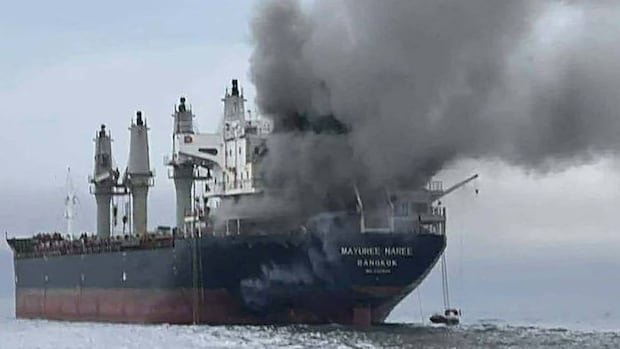

Energy and trade specialists are cautioning about a domino effect on global supply networks that will intensify as the ongoing U.S.-Israeli conflict with Iran persists and the Strait of Hormuz remains obstructed.
While much attention is rightfully on oil markets at present, the closure of the strait during the 12-day conflict has prevented about 250 million barrels of oil from exiting the Persian Gulf and reaching global destinations, leading to increased fuel prices worldwide. However, the impact goes beyond oil.
Experts are warning of potential disruptions in the supply of essential metals like copper, nickel, and cobalt sourced from the Gulf region. Additionally, nearly half of the worldwide urea supply, a widely used fertilizer, originates from this area, underlining its significance in the global economy.
Jim Krane, the Wallace S. Wilson Fellow for Energy Studies at Rice University in Houston, Texas, emphasized the critical role of the region in the global economy, highlighting the cascading effects rippling across various industries due to the strait’s closure.
The repercussions are already evident, with a major aluminum producer in Bahrain declaring force majeure and suspending deliveries. Furthermore, Qatar, a significant liquefied natural gas exporter, announced a production halt at its facilities and informed clients of impending delivery disruptions.
Even if the Strait of Hormuz were to reopen immediately, resolving these issues would take several months, according to Jeff Currie, CEO of investment firm Carlyle Group. The disruptions have impacted not just oil but also gas, fertilizers, metals, and petrochemicals, necessitating a protracted period for normalization.
Reports from South Korea indicate concerns among chip makers that the conflict could disrupt semiconductor production, particularly due to potential shortages of key materials sourced from the Middle East, such as helium.
In the short term, the oil and gas scarcities have driven up costs, but experts caution that prolonged closure of the strait could lead to even higher costs and shortages globally. Already, shortages are being felt in countries like Pakistan and Bangladesh, with potential power outages looming.
While efforts to co-ordinate the release of oil reserves may mitigate the situation to some extent, the uncertainty surrounding the conflict’s resolution poses a significant risk to global supply chains. The urgency to restore normal traffic flow through the strait is paramount to prevent a breakdown in the oil market and safeguard the global economy.