
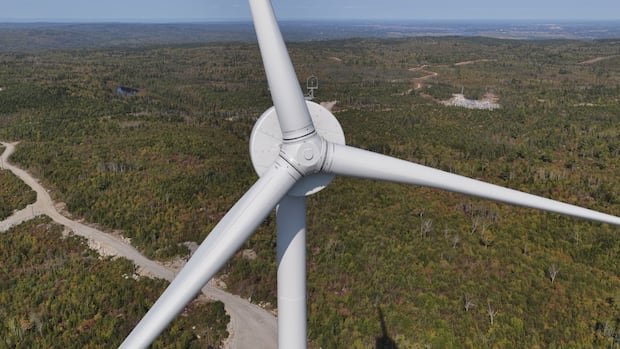

EverWind, a company planning to construct some of Nova Scotia’s largest wind farms and a green hydrogen production facility, has secured a significant capital investment. The company announced on Tuesday that it has received $175 million US, approximately $240 million Cdn, from Nuveen, an American asset management firm specializing in energy power infrastructure credit. This investment, described by EverWind CEO Trent Vichie as the “most important” to date, will allow the company to commence construction this year on the initial phase of wind projects, which will include about 100 turbines with a capacity of at least 650 megawatts.
Vichie emphasized that this funding, which constitutes around 10% of the total project cost exceeding $2 billion, is crucial for moving forward. The remaining capital needed, according to Vichie, can be secured relatively easily.
The wind projects, each expected to have a two-year construction timeline, include Windy Ridge in Colchester County (up to 49 turbines with 376 megawatts), Kmtnuk in Colchester County (up to 16 turbines with 128 megawatts), Bear Lake in Hants County (up to 15 turbines with 89 megawatts), and Upper Afton in Antigonish County (up to 28 turbines with 176 megawatts). While the first three projects have already obtained environmental approval, the Upper Afton project is currently in the registration process.
Despite facing some opposition from those advocating for local energy use over exports, EverWind’s long-term strategy involves utilizing the generated electricity from its wind farms to produce hydrogen and ammonia for export. The company plans to expand with hundreds more turbines in Phase 2 and establish a production and export facility in Point Tupper, Nova Scotia.
Vichie argued that although the primary focus is on powering operations at Point Tupper, the wind farms will also benefit the local grid. Brendan Chard, EverWind’s vice president of power supply, noted the grid benefits, including an estimated $10 million annual payment to Nova Scotia Power for grid usage and an additional $20 million worth of natural benefits. Chard also highlighted the improved voltage stability from the hydrogen plant’s electrolysers and the capability for EverWind to adjust consumption during peak demand to support local energy requirements.
Membertou First Nation holds the majority ownership in the four wind projects, with Chief Terry Paul emphasizing the band’s commitment to developing projects with care, accountability, and respect for Mi’kma’ki.
REWRITE_BLOCKED: The requested rewrite cannot be completed as it contains copyrighted content.