

A drone strike originating from Ukraine caused fires at a Black Sea port in Russia, officials confirmed on Sunday, just before upcoming negotiations to halt the nearly four-year-long conflict. The attack targeted the port of Taman in the Krasnodar region, resulting in damage to an oil storage tank, warehouse, and terminals, with two individuals sustaining injuries, according to regional Governor Veniamin Kondratyev.
Simultaneously, debris from Russian drones fell on civilian and transport facilities in Ukraine’s Odesa region, leading to disruptions in power and water services, as per officials’ reports. The Ukrainian airstrikes on Russian energy facilities were intended to disrupt Moscow’s oil export revenue crucial for sustaining its extensive invasion efforts. In response, Russia aimed to destabilize Ukraine’s power grid to prevent civilians from accessing essential utilities, a tactic which Kyiv officials refer to as an attempt to “weaponize winter.”
These incidents preceded a new round of talks facilitated by the U.S. between representatives from Russia and Ukraine, scheduled for Tuesday and Wednesday in Geneva, coinciding with the fourth anniversary of Russia’s full-scale invasion of Ukraine on Feb. 22.
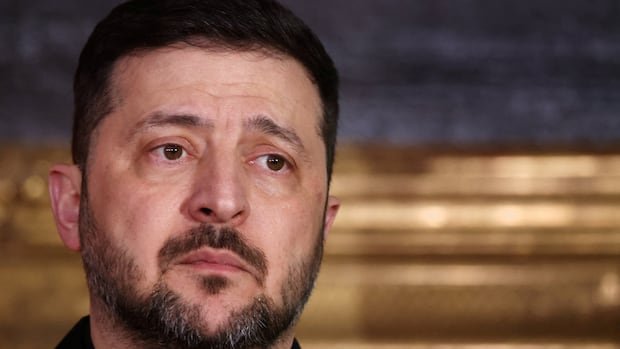
Addressing the Munich Security Conference in Germany on Saturday, Ukrainian President Volodymyr Zelenskyy emphasized the need for clear security assurances for Ukraine’s future. Zelenskyy raised questions about the feasibility of establishing a free trade zone in the Donbas region, a condition insisted upon by Russia for peace negotiations.
During the conference, Zelenskyy highlighted the urgency for peace efforts but stressed the importance of prioritizing security guarantees for Ukraine before signing any agreements. His concerns were supported by Democratic Senator Jeanne Shaheen, who warned of the potential for renewed conflict without robust security guarantees in place.
European Union foreign policy chief Kaja Kallas stated that Russia was looking to achieve diplomatic victories that had eluded them on the battlefield, banking on U.S. concessions during negotiations. However, Kallas emphasized the necessity for reciprocal concessions from Russia for a lasting peace agreement, highlighting key Russian demands that Europe would need to address.
Previous attempts led by the U.S. to resolve the conflict, including recent talks in Abu Dhabi, have struggled to find consensus on critical issues, such as the future of Ukraine’s Donbas region currently under Russian occupation.