
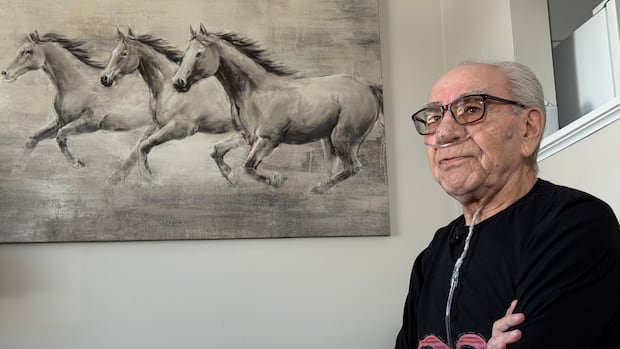

In the 1970s, Bruce Flamont was well aware of being under police surveillance, noticing patrol cars outside his home and workplace, and encountering an officer who shadowed him during his runs for information. He also knew that individuals within or connected to his organization were deliberately providing information to the police.
Now residing in Saskatoon at the age of 80, Flamont spoke with CBC about recently declassified files from Canada’s Cold War-era domestic intelligence agency concerning Indigenous organizations. A specialist who reviewed the documents described the operation as a dark chapter in Canada’s history.
During this time, the Royal Canadian Mounted Police (RCMP) employed paid informants, wiretaps, and physical surveillance to infiltrate and disrupt legitimate Indigenous groups nationwide. Concerns at the time revolved around the potential subversive or violent nature of Canadian Indigenous rights movements, as they were seen as susceptible to influence from communist, Black Power, or militant Indigenous groups in the United States.
Among the organizations monitored by the police were the Métis Society of Saskatchewan and the Federation of Saskatchewan Indians, which laid the groundwork for today’s Métis Nation—Saskatchewan and Federation of Sovereign Indigenous Nations.
Flamont played a pivotal role in organizing the Métis people, serving as the recording secretary at the founding meeting of the Métis Society of Saskatchewan and later becoming its CEO during much of the 1970s. During this period, the Métis advocated for various issues such as employment, housing, education, social programs, hunting and timber rights, all while facing widespread racism and economic marginalization.
Flamont was actively involved in events monitored by the police, including a sit-in at the provincial legislature in Regina in 1974, a blockade at Waskesiu during a premiers’ meeting in 1978, and several sit-ins at government offices in northern communities. The RCMP documents validated Flamont’s suspicions of being monitored.
The RCMP’s monitoring of Indigenous political activities began as early as 1968 but intensified in 1973 after 200 non-violent youth activists occupied the Department of Indian Affairs in Ottawa for 24 hours. This incident prompted the RCMP to expand its human intelligence efforts in Indigenous communities.
Clem Chartier, one of the youth activists from the 1973 occupation, later assumed leadership roles within the Métis community provincially and nationally. Despite some acknowledgments of the RCMP’s concerns about radicalization, Chartier, now 80, does not believe he was under surveillance. However, he emphasized the inherent scrutiny radical individuals face from the state.
Chartier shifted from his radical past to pursue a path of political negotiation and conciliation, eventually studying law at the University of Saskatchewan in 1978. Reflecting on the RCMP files, he highlighted the dire economic and social conditions faced by Indigenous peoples and emphasized the importance of addressing these issues to prevent radicalism.
Overall, the declassified documents shed light on a troubling chapter in Canadian history, underscoring the surveillance and disruption of Indigenous organizations during the Cold War era.