
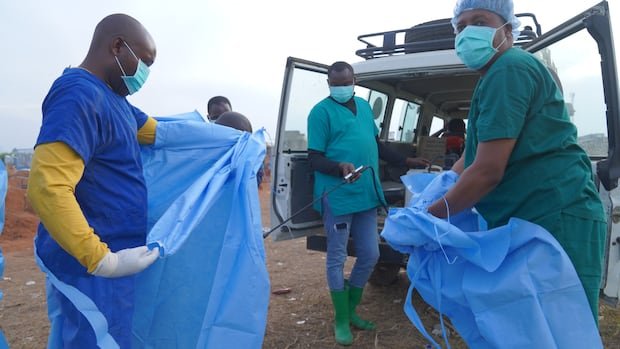

More than 2,500 individuals have lost their lives in the Ebola crisis in the Democratic Republic of Congo, which is rapidly spreading across an area larger than France, stated Julien Harneis, the senior United Nations Ebola coordinator. Harneis, speaking from the city of Bunia in northeastern Congo via video call, emphasized the urgent need for additional assistance as the current funding reserves are expected to be depleted within weeks.
The escalating outbreak has led to local communities in the region expressing anger and fear, resulting in attacks on healthcare workers who are at the forefront of the response efforts. Tragically, some of these workers have contracted the virus and succumbed to the disease.
In response to the crisis, a quantity of vaccines for a previous strain of Ebola has been dispatched to the D.R.C. The requested doses of the Ervebo vaccine, approved for combatting the Zaire Ebola virus strain, will be utilized in a late-stage trial to assess its effectiveness against the current Bundibugyo virus. The World Health Organization highlighted the importance of conducting clinical trials to ascertain the vaccine’s potential efficacy against the Bundibugyo virus.
The current Ebola outbreak, caused by the Bundibugyo species of the virus, has become the most extensive in the country’s history, surpassing previous outbreaks. The situation is dire, with the epidemic rapidly expanding in an area larger than France, outpacing the response efforts. Compounded by decades of conflict in the region, the crisis is creating significant humanitarian needs.
Notably, over 160 healthcare workers have contracted Ebola, with 43 fatalities among them. Harneis expressed concerns about the safety of frontline responders, citing instances of attacks on healthcare facilities and ambulances by agitated individuals influenced by fear and misinformation. Additionally, the disruption of banking services due to flight restrictions has hindered the payment of personnel engaged in containing the outbreak.
Worryingly, conspiracy theories circulating among locals have fueled distrust and resistance to containment measures, leading to violent reactions when health protocols restrict traditional burial practices. The diminishing capacity of humanitarian organizations, coupled with challenges in sustaining financial support and logistical operations, further complicates the already dire situation.