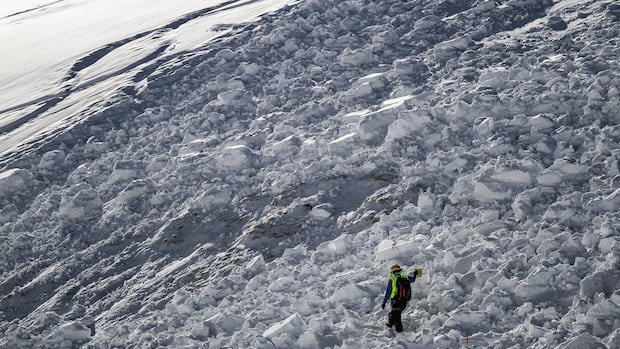

In February, a series of avalanches resulted in the deaths of five individuals in British Columbia and Alberta. During the same month, California and Utah experienced over a dozen avalanche-related fatalities, with one incident claiming the lives of nine individuals. In Europe, spanning from Andorra to Slovakia, the current season has reported 125 avalanche-related deaths.
These tragic events underscore the constant risk associated with backcountry activities, even for experienced and well-prepared individuals. The unpredictability of avalanche occurrences further complicates safety measures.
Experts interviewed by CBC News shed light on the formation of avalanches, the challenges in predicting them, and the potential impact of climate change on their severity.
Avalanches are described as masses of snow moving visibly at speed, often down slopes. Specific conditions, such as a strong layer over a weak layer and a triggering event, are necessary for an avalanche to occur. The snowpack’s composition evolves with each weather event, affecting its stability and the likelihood of avalanches.
Various types of avalanches exist, ranging from loose sluffs to heavy, cohesive slabs, each with distinct triggers. Forecasting avalanches involves a blend of scientific analysis and interpretation, as snowpack structures can vary even within short distances.
The influence of climate change on avalanches remains a topic of study. While the warming planet may impact snowfall patterns, the exact correlation with avalanche occurrences is complex due to the multifaceted nature of weather events and their effects on snow stability.
Experts emphasize the importance of preparedness, including staying informed of local forecasts, acquiring proper gear, and undergoing avalanche safety training. Additionally, establishing clear rules and communication within a group dynamic can enhance safety measures in backcountry settings.