
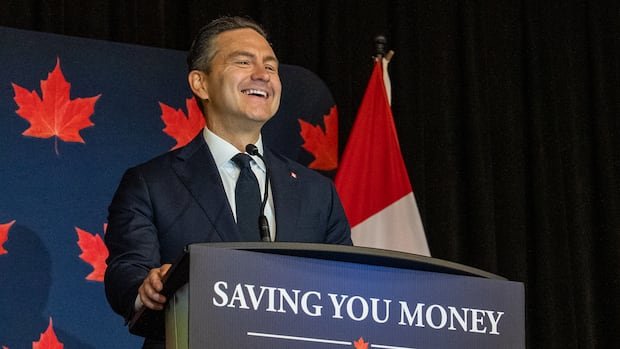

A group of Conservative Members of Parliament have become disillusioned with Pierre Poilievre as their leader. Despite this discontent, Poilievre’s position remains secure for now, as there is not a strong desire within the party to remove him and select a new leader. Last year, Poilievre was close to leading the Conservatives to a significant victory, but the Liberals managed to win by offering a fresh perspective.
Since then, Poilievre has faced challenges in regaining momentum, with critics labeling him as outdated and ill-equipped to handle the current issue of strained relations with the U.S. government. While he received praise for recent interviews promoting Canada on American television, Poilievre has not yet taken a clear stance on the government’s retaliatory tariffs against American goods.
During the party’s caucus retreat in Penticton, British Columbia, sources revealed that morale among caucus members is low due to the dominating U.S. trade dispute, which puts Poilievre and the team at a disadvantage. Despite efforts to push the government to reconvene Parliament early and disclose a failed trade deal, the party’s relevance is being questioned.
Some MPs, including Jamil Jivani, have publicly expressed their desire for Poilievre to adopt a more assertive stance. However, internal dynamics prevent many MPs from openly advocating for Poilievre’s removal, fearing it could divide the party. Conservative deputy leader Melissa Lantsman acknowledged the party’s underperformance and hinted at forthcoming changes to the party’s strategy.
Despite internal tensions and declining poll numbers, Poilievre’s strong support from the party’s base, as evidenced by an 88% approval rating in a recent leadership review, has deterred any immediate leadership challenges. While some MPs privately express dissatisfaction with Poilievre, the majority are hesitant to trigger a leadership change that could lead to further division.
Senior party figures suggest that allowing Poilievre to lead the party into the next election, potentially resigning afterwards, would be a more cohesive approach than a premature leadership change. Despite current challenges, Poilievre’s ability to resonate with voters on economic issues and maintain party unity amidst differing views within the caucus gives hope for a potential turnaround in the future.