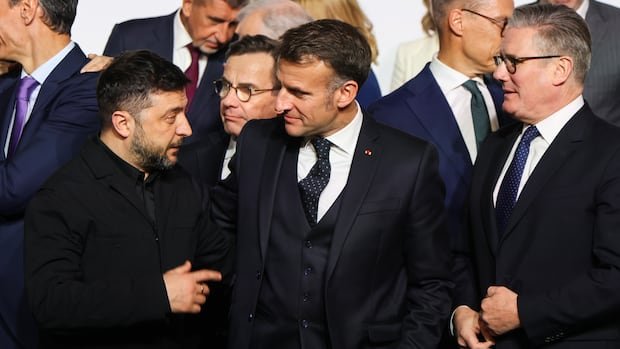

After nearly four years of significant conflict, Ukraine has received a set of concrete security assurances from over 30 countries, including Canada, to bring into potential peace negotiations with Russia. This agreement, supported by the “coalition of the willing,” entails specific commitments of troops from Western nations to dissuade Russia from reigniting hostilities in the event of a ceasefire.
British Prime Minister Keir Starmer emphasized the importance of laying down practical groundwork for peace, noting that there is still considerable work ahead. He stressed that achieving a peace agreement hinges on Russian President Putin’s willingness to make concessions, highlighting that despite Russia’s rhetoric, Putin’s actions demonstrate a lack of readiness for peace.
As part of the guarantees formalized on Tuesday, the U.S. has committed to assisting in monitoring a potential ceasefire. France and the U.K. have pledged to deploy troops to Ukraine in the event of a ceasefire to establish regional supply hubs, facilitating a potential larger troop deployment if Russia resumes its offensive.
Canada has vowed substantial ongoing support for the peace accord, although the specifics of the Canadian forces to be dispatched remain unclear due to ongoing military rebuilding efforts to address personnel and equipment shortages. Prime Minister Mark Carney affirmed Canada’s commitment, citing a planned $81.8-billion defense investment over the next five years as a crucial step in bolstering military capabilities.
Ukrainian President Volodymyr Zelenskyy hailed the agreement as a tangible document and expressed gratitude to the participating nations. The negotiations faced challenges as leaders were distracted by U.S. military involvement in Venezuela and renewed threats of Greenland annexation by U.S. President Donald Trump.
A U.S. defense expert emphasized the need for coalition countries to transparently communicate the implications of the security assurances to their citizens. Highlighting objections from Russia, including the presence of NATO in Ukraine, the expert underscored the potential for Moscow to undermine the agreement through disinformation campaigns.
In light of these challenges, coalition members, including Canada, must be prepared for efforts by Russia to sway public opinion against the agreement. The dissemination of misinformation could erode support for the coalition over time, particularly by framing the presence of troops in Ukraine as a contentious issue in Western countries.