
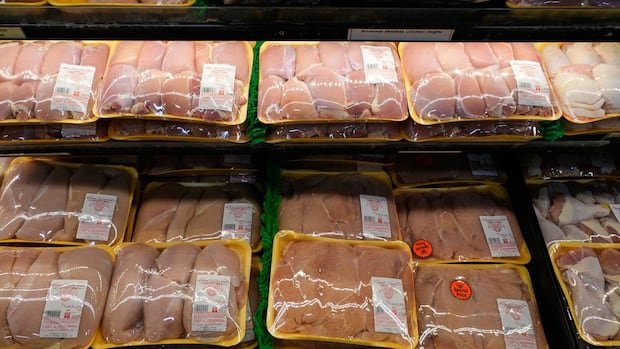

Have you noticed the increase in your grocery bill lately? Well, it’s mainly due to the rising prices of chicken thighs. Despite a slight easing in Canada’s inflation rate last month, grocery items like chicken thighs saw a significant price hike. According to the latest consumer price index (CPI) data from Statistics Canada, the inflation rate decreased to 2.8% in June, primarily driven by lower gas prices. However, the cost of chicken thighs surged by 8.2% from May to June and by 13.6% compared to the previous year.
Interestingly, while chicken thighs became pricier, other grocery items like cucumbers, tomatoes, and grapes witnessed price drops from May to June. For instance, a club pack of boneless, skinless chicken thighs at a Loblaws store in Toronto was priced at $22.18, while a Walmart in North Vancouver sold a value pack of Lillydale chicken thighs for $22.48.
Insights from Experts
Michael von Massow, a food agriculture professor at the University of Guelph, attributes the increase in chicken prices to demand dynamics. Consumers are opting for more affordable protein options due to the overall rise in protein prices. Sylvain Charlebois, from Dalhousie University’s Agri-Food Analytics Lab, echoes this sentiment, indicating that expensive beef prices are steering consumers towards chicken thighs.
Although chicken thighs remain a relatively cheaper protein source compared to beef, the poultry industry is facing challenges in meeting the heightened demand. The prices of various chicken parts, apart from breasts, have been steadily climbing. While there was a slight drop in breast prices, drumstick prices went up by 1.8% from May to June, as per Statistics Canada’s retail data.
Looking Ahead
Despite the current protein price fluctuations, experts believe that the chicken supply will eventually adjust to meet consumer demands. There’s also a growing interest in plant-based proteins as an alternative. However, preparing plant-based proteins like beans and lentils requires more time and effort compared to cooking chicken. Additionally, consumer food preferences and cooking skills play a significant role in shaping protein consumption patterns.
As Canadians navigate through these changes in the protein market, it’s evident that food choices are influenced by various factors, including prices, availability, and personal preferences.
Tag: rewrite-pending