
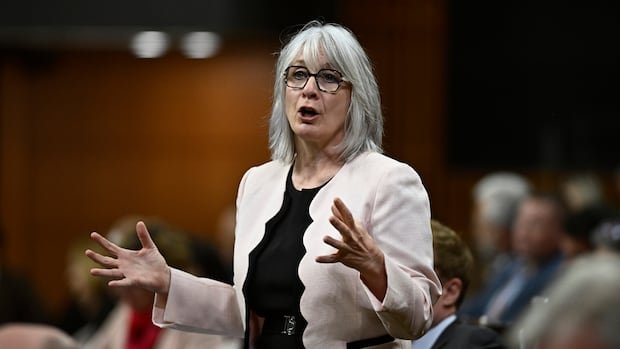

The Carney government’s recent major projects bill, facing opposition from organized labor, seeks to amend a contentious part of the Labour Code. Jobs Minister Patty Hajdu asserts that unions will gain more leverage, not less, under the proposed changes. The federal government introduced Bill C-39, an omnibus bill, featuring modifications to Section 107 of the Labour Code, a provision granting the responsible minister broad authority to uphold industrial peace.
Since 2024, the federal government has sparked criticism for frequently utilizing Section 107 to mandate striking workers back to work and initiate binding arbitration. With Bill C-39, the government can appoint a special mediator for a 21-day period. The mediator will then present a report to the minister detailing bargaining issues, both parties’ stances, and the likelihood of reaching an agreement.
The report, along with recommendations, will be made public five days after issuance unless a deal is struck. Furthermore, the minister must consider the report before invoking Section 107 to compel workers to return to work. Hajdu highlighted that the public release of the mediator’s report will provide union members with enhanced bargaining power, particularly in cases where employers act in bad faith.
Despite the government’s perspective that the bill reinforces the right to strike, unions express deep concerns about its potential impact on labor rights. The bill stipulates that the minister must believe a strike or lockout negatively affects or may affect the national interest before issuing an order. The Canadian Union of Public Employees has vowed to defy Bill C-39 if passed without amendments.
Canadian Labour Congress President Bea Bruske stated that while some aspects of the bill are welcomed, the government reneged on its promise regarding the right to strike. She emphasized that granting the government expanded authority to end a legal strike when it deems it against the national interest undermines workers’ bargaining power. The bill’s intention to expedite project approvals has also raised alarm among Indigenous groups, who fear it could prioritize commercial interests over the Crown’s obligations.
With the government describing Bill C-39 as significant legislation, it assures stakeholders of opportunities to provide input. The government plans to utilize a legislative committee, a rarely-used parliamentary tool, to prioritize the study of the bill. This committee, composed of designated parliamentarians, will exclusively focus on Bill C-39. Its initiation date remains unspecified. Indigenous leaders urge for thorough public engagement to uphold democratic principles.