
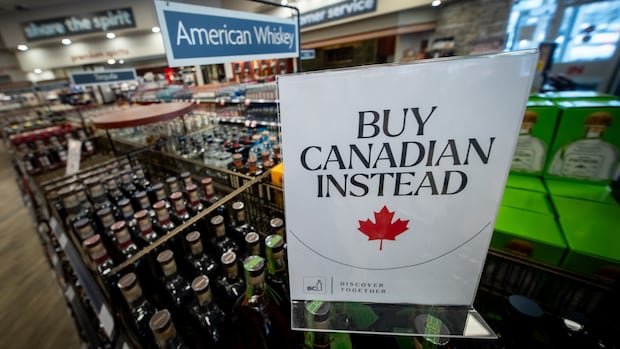

In the aftermath of a failed deal in the ongoing trade dispute with the U.S., the presence of American alcohol in Canada remains largely unaffected. Contrary to some reports suggesting a complete ban on American alcohol, the situation is more nuanced. Described as a strategic move rather than an embargo, various provinces have implemented different levels of restrictions on American alcohol sales within their jurisdiction.
According to Robert Huish, a professor at Dalhousie University, the provinces have used these measures as a symbolic gesture, garnering public support for their decisions. The availability of American alcohol varies significantly across Canada, with Alberta allowing full access, while Ontario’s LCBO, one of the world’s largest alcohol purchasers, has completely restricted American alcohol sales.
Different provinces have adopted diverse approaches towards American alcohol, with some like Nova Scotia taking a middle ground. The actions taken by provinces have even caught the attention of the Trump administration, prompting responses from the White House.
A detailed overview of American alcohol availability in each province reveals unique strategies. For instance, British Columbia permits the purchase of American alcohol from private outlets despite restrictions at Crown-run stores. Alberta, Saskatchewan, Manitoba, Ontario, Quebec, and other provinces have implemented varying degrees of restrictions on American alcohol imports and sales.
Despite American alcohol being accessible in many regions, Canadians are increasingly turning to local alternatives due to dissatisfaction with the U.S. government’s behavior. This shift in consumer behavior reflects a broader sentiment of disapproval towards ongoing trade disputes.
As the situation continues to evolve, the impact of these restrictions on American alcohol sales in Canada remains a topic of interest.