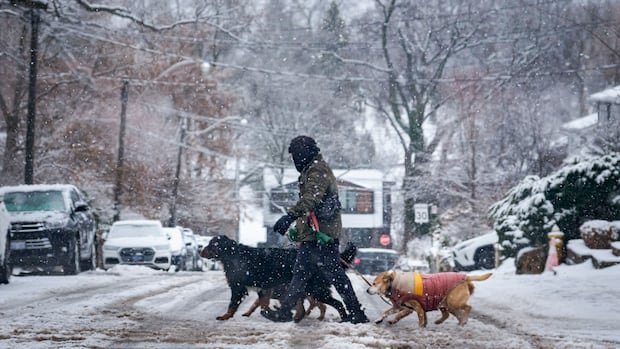

Environment and Climate Change Canada (ECCC) is foreseeing a winter with above-average temperatures in the eastern Arctic region, while the rest of Canada’s winter forecast remains uncertain. ECCC’s predictions for December to February indicate warmer temperatures than usual in parts of Nunavut, Hudson Bay, Northern Quebec, and Labrador. Some areas in the Yukon, Northwest Territories, and Nova Scotia may experience colder temperatures, with normal temperatures expected in certain regions along the coast of British Columbia, eastern Nova Scotia, and central and eastern Newfoundland.
However, for vast areas of British Columbia, Alberta, Saskatchewan, Manitoba, southern Ontario, Quebec, and the Atlantic provinces, ECCC’s confidence in making a specific prediction is low. This uncertainty is attributed to conflicting factors such as climate change and the presence of a weak La Niña this winter. The cooling effect of La Niña, particularly affecting western Canada, combined with the warming impact of climate change, complicates the anticipation of long-term weather patterns across the country.
Despite experiencing a cold start to winter in some parts of Canada due to La Niña, the overall weather outcome remains uncertain. The warmer ocean waters could fuel winter storms originating in the West and moving across the country, potentially intensifying storm systems. ECCC’s precipitation forecast suggests above-average precipitation in northwestern and western Canada, while precipitation amounts in other areas are difficult to predict with certainty.
Moreover, ECCC has expanded its rapid extreme weather attribution system to include extreme precipitation events such as rain, freezing rain, sleet, hail, and snow. By analyzing climate models, researchers determine the likelihood of extreme events occurring in the current climate compared to historical climates, attributing the role of human-caused climate change. Recent data shows that a majority of extreme precipitation events in Canada since June 2025 were more likely influenced by climate change. This expanded attribution system aims to enhance public understanding of the impact of climate change on extreme weather events and daily life.