
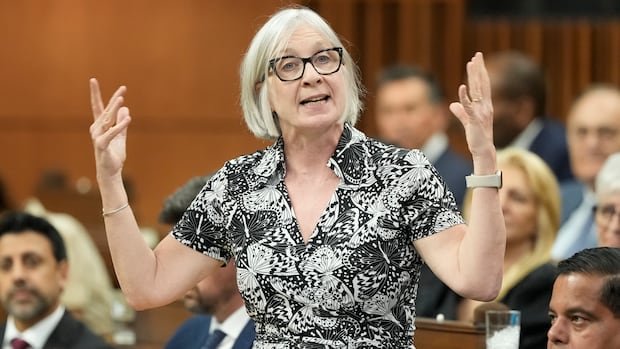

The Canadian Families Minister announced that the federal government will provide an extra $5.4 billion to provinces and territories over a two-year period to support the national $10-a-day child-care program and alleviate financial pressures. The initiative, launched in 2021 with the goal of reducing parental fees and establishing numerous new child-care spaces, has faced challenges in meeting its objectives in various regions.
Minister Patty Hajdu acknowledged the plea from provinces for additional federal funding to address the difficulties they encounter in lowering fees, expanding services, and attracting and retaining sufficient early childhood educators amidst escalating costs and demand. She emphasized the crucial role of financial support in overcoming these obstacles during discussions with provincial and territorial ministers.
Hajdu highlighted the government’s existing $58 billion investment in affordable child care nationwide and specified that the supplementary $5.4 billion is intended to accommodate the heightened cost pressures reported by provinces. This additional funding is flexible, allowing regions to utilize it according to their specific needs.
While several provinces have successfully reduced child-care fees to an average of $10 per day, some, like Ontario where fees average $19 daily, have not achieved this target. Ontario estimated it would require an extra $2 billion annually to reach the $10 per day goal.
Advocates for universal child care expressed disappointment at the lack of new investments in the government’s recent economic update, cautioning that without increased funding, the program’s sustainability could be at risk. They emphasized the detrimental impact on the economy when families struggle to secure affordable and dependable child care, leading to reduced workforce participation by mothers.
Minister Hajdu underscored the economic significance of accessible child care and emphasized that the new funding aims to safeguard the program’s progress in reducing fees and expanding child-care options. She highlighted the substantial savings for families, averaging $11,000 per child annually, resulting from the program.
The growing demand for child-care services has resulted in increased waitlists across various regions. While the initial agreements aimed to establish 250,000 new child-care spaces by March, approximately 173,500 spaces have been created to date. Some provinces have already extended their child-care agreements for five years, while others, including Alberta and Ontario, have opted for one-year extensions, potentially benefiting from the additional funding to enhance negotiations.
Minister Hajdu emphasized that the funding comes with conditions for enhanced data sharing to identify existing gaps in the child-care system. Understanding these barriers, fee structures, access issues, and operational challenges nationwide is deemed crucial for optimizing the program’s effectiveness.