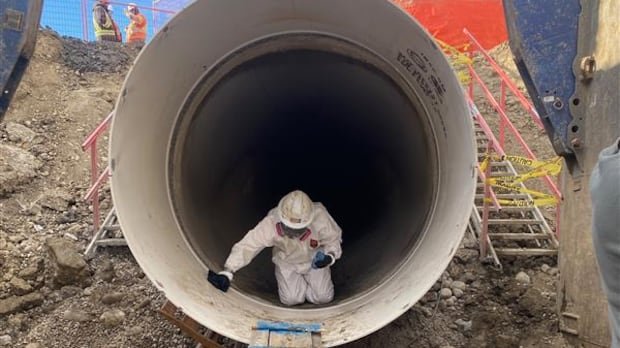

The city council has approved moving forward with the suggestions outlined in an independent review of the 2024 failure of Calgary’s primary water feeder main after Mayor Jeromy Farkas emphasized the importance of implementing the changes without any financial constraints.
Following extensive discussions on Wednesday evening, the council unanimously agreed to commence work on the proposed recommendations. The report, unveiled on the same day, underscores the critical need to address deep-rooted challenges linked to Calgary’s water infrastructure, which have persisted for decades.
According to the report, concerns about the potential failure of the pipe were initially raised in 2004 following a similar incident involving another feeder main in northeast Calgary. Despite this early warning, the city consistently postponed inspections, monitoring, and risk mitigation measures for the feeder main over the next twenty years.
Although the Bearspaw feeder main was recognized as a high-risk asset, insufficient attention was given to its maintenance due to the perceived low likelihood of failure, leading to resources being diverted to other areas, as noted in the report.
The review panel’s recommendations include expediting the twinning of the Bearspaw feeder main by early next year, repairing and maintaining the existing pipe, and establishing a dedicated water utility department overseen by an independent board of experts.
Emphasizing the urgency of the proposed actions, the report highlights the high vulnerability of the pipe to potential catastrophic failures in the future. Mayor Farkas urged the council to implement all the recommendations without selecting specific ones, stressing the council’s obligation to execute the necessary changes.
Addressing the responsibility for the water main breaks, Farkas stated that the report does not attribute the issues to any single entity or administration but rather to a series of decisions made over multiple council terms. He highlighted the need for redundancy in addition to a replacement line to fortify Calgary’s water system and potentially reduce costs in the long run.
The report also underscores the persistent problems in the governance of the Bearspaw main, with missed inspection opportunities in 2017, 2020, and 2022. It points out the lack of clear accountability within the water utility system, leading to delayed decision-making and prioritization issues.
Furthermore, the panel recommends expediting the duplication of the steel pipe within a specific timeframe, maintaining the current feeder main, and establishing a dedicated water utility department led by a chief operating officer. The report suggests a stable revenue base to ensure infrastructure renewal and reliable water services, with utility fees being the primary source of funding.
The panel anticipates that most of the proposed reforms can be implemented within a year, with a complete transition to a city-owned corporation for the water department within three years. The report stresses the need for a long-term focus on Calgary’s water system to prevent future emergencies and ensure sustainable water management.
In response to council inquiries about the delayed improvements to the water system, the panel reiterated the urgency of the situation and emphasized the need for immediate action to address the deficiencies in Calgary’s water infrastructure.