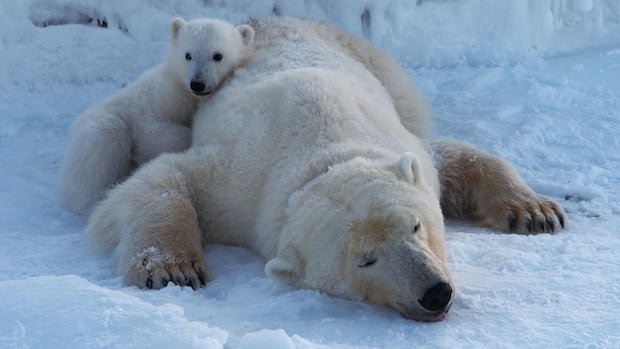

A polar bear swimming alone in the ice-free Arctic has become a symbol of the impact of a warming world on wildlife. However, the polar bears in the Barents Sea region, north of Norway, seem to be faring well at present. Despite decades of melting sea ice and more ice-free days, a recent study published in Scientific Reports reveals that this specific subpopulation of polar bears has not experienced the anticipated negative effects on their health.
According to Andrew Derocher, a professor of biological sciences at the University of Alberta and co-author of the study, the bears in the Barents Sea region are managing fine despite the changing environment. While it may seem surprising, experts believe that the bears are adapting to the diminishing sea ice and are still finding enough food to sustain themselves.
In a species closely associated with human-induced climate change, experts highlight the variability within polar bear populations. Noting that some animals may benefit from shifting environmental conditions, Marie Auger-Méthé, a statistical ecologist at the University of British Columbia, emphasizes that there will be winners as well as losers in the face of climate change.
The study, which examined data from live captures of polar bears between 1995 and 2019 in the Svalbard archipelago, located halfway between Norway and the North Pole, involved 770 bears from one of the 20 recognized subpopulations of polar bears. The research indicates that while some bears remain on land during ice-free periods, others venture as far as Russia’s Franz Josef Land.
Through capture-mark-and-recapture methods, researchers were able to assess the bears’ body conditions and overall health. Despite facing earlier sea ice breakup and prolonged ice-free periods post-2005, the polar bears in the Svalbard area displayed resilience by maintaining stable body conditions over time.
Experts attribute this resilience partly to the bears diversifying their diet to include prey not typically consumed, such as walruses, bird eggs, and whale carcasses. This shift in diet may offer the bears easier access to food sources, reducing the energy expended on hunting.
While the success of the Barents Sea polar bears is a positive sign, experts caution that not all polar bear populations are faring as well. Canadian polar bears, for instance, continue to struggle due to declining body conditions, survival rates, and reproduction tied to diminishing sea ice.
Looking ahead, experts acknowledge that the future of polar bears remains uncertain as climate change continues to impact their habitats. The long-term outlook for polar bears worldwide appears grim as rising global temperatures threaten to eliminate their sea ice habitats, ultimately jeopardizing their survival.
Despite the uncertainties, researchers remain hopeful and vigilant, recognizing the need for ongoing monitoring and conservation efforts to safeguard polar bear populations in the face of a rapidly changing climate.