
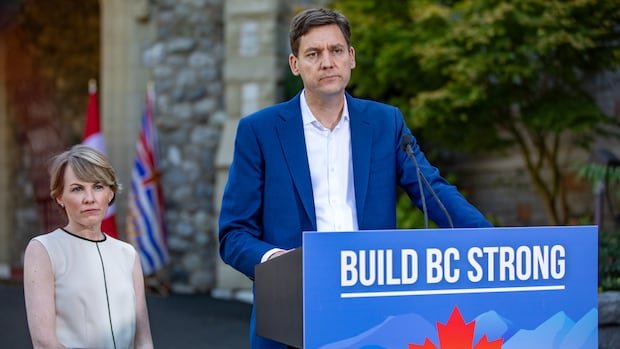

David Eby’s decision to call an early election in British Columbia seems to have shifted the political landscape, as indicated by recent polling data. The latest survey by the Angus Reid Institute reveals that the B.C. Conservatives, under the leadership of Lorne Doerkson, are currently leading with 43% support among respondents, giving them an eight-point advantage over the NDP, who are at 35%.
This development marks a significant turnaround from the previous scenario where the NDP held a four-point lead over the Official Opposition before Kerry Lynne Findlay’s resignation. Shachi Kurl, President of the Angus Reid Institute, noted that there is growing discontent with the current government, especially concerning the decision to call an early election.
A notable finding from the survey is that two-thirds of those polled, including half of NDP supporters, believe that Eby is prioritizing his personal interests over those of British Columbians. Katrina Chen, a former NDP cabinet minister who worked with Eby in 2022, described the snap election as a risky move. She emphasized the need for Eby to demonstrate that his administration’s policies prioritize the well-being of the people and the economy, rather than solely focusing on trade issues.
The upcoming election has been further complicated by the announcement of four NDP cabinet ministers who will not seek re-election. Ravi Kahlon, Brenda Bailey, Lana Popham, and Kelly Greene have decided not to run again. Greene, in particular, has been critical of the government’s approval of the Tilbury LNG facility expansion in Delta. Chen acknowledged that the departure of these MLAs will have a significant impact on the election dynamics.
During his campaign stop in Maple Ridge, Eby highlighted his commitment to supporting local industries by ensuring that a substantial portion of materials used in public projects are Canadian-made. In response, Doerkson criticized the NDP’s economic track record and dismissed Eby’s promises as mere election rhetoric.
Eby defended his decision to call an early election, drawing a parallel between the threat posed by U.S. President Donald Trump’s policies and a raging wildfire that must be contained. He emphasized the importance of unity and resilience in the face of challenges, stating that his actions are in the best interest of British Columbians.
As the political landscape evolves, Eby’s leadership and decision-making will continue to be scrutinized by voters and critics alike. The outcome of the upcoming election will ultimately determine the future direction of British Columbia’s governance.