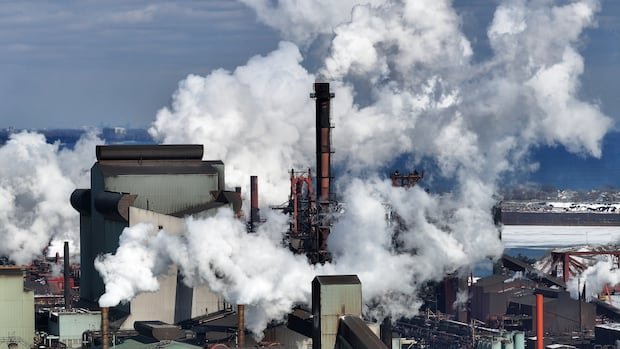

ArcelorMittal Dofasco has discreetly elongated its timetable by 22 years to eliminate coal for “decarbonized” steel production, as per a federal government document, now targeting 2050 instead of the initial 2028 deadline. The largest emitter of greenhouse gases in Ontario is set to receive an additional $50 million from the federal government for the endeavor, as revealed in an amendment on the Government of Canada’s website in March. This amendment was made post the imposition of tariffs on Canadian steel by the U.S. and just before the federal elections. The total contribution from Ottawa now stands at $450 million.
Evan Ubene from Environment Hamilton criticized the move, stating that the government has allowed the company to prolong its regular emissions significantly. On the other hand, ArcelorMittal Dofasco emphasized that while they have extended the timeline, their goals and intentions remain unchanged. The extra funding is required for a technical modification in the direct reduced iron module plans.
Contrary to the high-profile announcements in 2022 regarding the transition, where officials, including the prime minister and Ontario premier, declared the decommissioning of blast furnaces and coke plants by 2028 in favor of direct reduced iron technology and electric arc furnaces, the situation has evolved. The steel plant is now projected to be powered by natural gas and hydrogen, aiming to slash greenhouse gas emissions by 60% and reduce harmful airborne pollutants.
The Ontario Ministry of Economic Development, Job Creation, and Trade disclosed that Dofasco has not utilized any of the allocated funds for electric arc furnaces. The federal agency Innovation, Science and Economic Development Canada confirmed that Dofasco will shift iron production to Quebec instead of implementing direct reduced iron technology on-site. The impact on jobs in Hamilton remains uncertain, as the project’s original promise of maintaining 4,600 full-time jobs within Canada is now replaced with a commitment to support thousands of jobs during the project’s engineering and construction phases.
The amendment has introduced ambiguous language regarding the project’s details and timeline, raising concerns about the transparency and clarity of the transition. Despite the project’s aim to reduce greenhouse gas emissions, doubts persist about Dofasco’s continued reliance on coal. Community stakeholders are demanding more transparency and clarity from Dofasco and the government regarding the project’s future implications.
The next community meeting with Dofasco is scheduled for January 20, where residents anticipate further clarification on the project’s trajectory.