
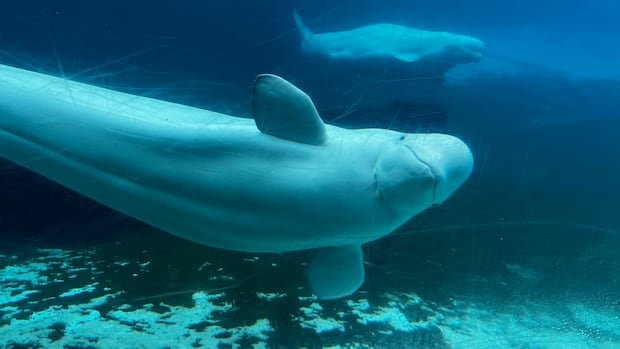

The Canadian government is being urged by Animal Justice, a national animal law advocacy organization, to impose a condition that the 30 beluga whales at Marineland in Niagara Falls, Ontario, allowed for transfer to U.S. aquariums are not to be bred. This call was made on the same day that the U.S. National Oceanic and Atmospheric Administration (NOAA) approved the emergency rescue plan for 28 of the beluga whales to be distributed among four U.S. aquariums. Additionally, two other whales are intended for transport to an aquarium in Spain, pending permits from the Spanish government.
Animal Justice emphasized the importance of ensuring that the transported whales are not required to perform in shows similar to those previously held at Marineland. The organization stressed that the whales should not be used for entertainment purposes, as the era of captive marine mammal performances has waned in popularity over the years, leading to Marineland’s closure to the public in 2024.
While the office of Canadian Fisheries Minister Joanne Thompson did not explicitly commit to preventing the breeding or entertainment use of the beluga whales at their new locations, it did state that each whale must undergo a health assessment by a Canadian veterinarian as a prerequisite for export permits.
The federal government’s policy dictates that exported cetaceans should not be bred or impregnated at their destination facilities. The U.S. aquariums receiving the beluga whales are accredited by the Association of Zoos and Aquariums, which involves a thorough evaluation process to ensure proper animal care standards are met.
Camille Labchuk, an executive director at Animal Justice, emphasized the necessity of protecting the beluga whales from breeding and performance obligations during their transfer. Labchuk stated that this generation of whales should be the last to endure captivity, highlighting the importance of upholding Canadian laws that prohibit breeding and entertainment exploitation of cetaceans.
The U.S. aquariums involved in the rescue mission have detailed plans to provide specialized care for the beluga whales upon their arrival, including diverse seafood diets, high-quality living environments, and access to medical care as needed. Marineland expressed its support for the whale rescue initiative, acknowledging its inability to provide long-term care for the animals.
The process of transporting the beluga whales to the U.S. may take several weeks, pending the completion of all necessary approvals and assessments.