
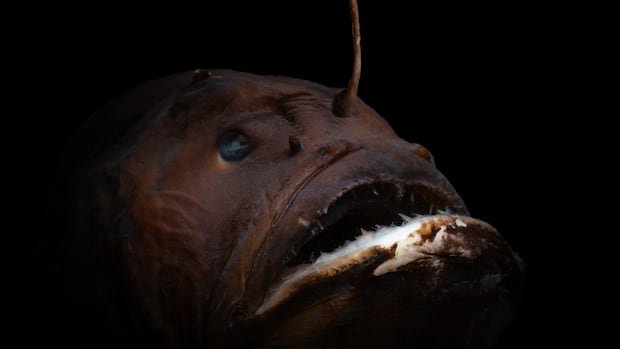

A recent study sheds light on the intriguing dual role of the iconic forehead lure of female anglerfish. While traditionally known for attracting prey, researchers propose that this appendage also serves as a beacon for male anglerfish seeking mates in the depths of the sea.
The study, published in the journal Ichthyology and Herpetology, analyzed DNA from over 100 preserved anglerfish species to explore how different lure designs may have evolved to enhance reproductive success. Marine biologist Milton Love, not part of the study, commended the innovative perspective presented in the research.
Anglerfish, despite the popular depiction in movies like “Finding Nemo,” exhibit a wide range of species with diverse lure variations. These lures, an evolutionary adaptation of the dorsal fin spine, come in various forms, emitting chemicals or glowing with bioluminescence. The study’s lead author, biologist Alex Maile, found the lure’s evolutionary diversity intriguing and sought to understand its significance.
By mapping lure variations onto an evolutionary tree and utilizing computer modeling, researchers traced the development of anglerfish lures back millions of years. The emergence of bioluminescent lures among deep-sea species marked a critical turning point, likely aiding males in locating females in the dark depths.
Male anglerfish, significantly smaller than females and lacking lures of their own, rely on sensory cues to find mates. Once sexually mature, these males cease feeding and embark on a quest to find a female for reproduction.
The use of bioluminescence as a mating strategy is not unique to anglerfish, with other deep-sea creatures like lanternfish and dragonfish also utilizing glowing displays to attract partners. Studies suggest that males of certain species, such as dragonfish, have evolved features like large eyes to better detect glowing females.
While the mating ritual of anglerfish may seem unconventional, involving the male attaching to the female and becoming a permanent sperm donor, researchers view it as a natural part of their reproductive process. Love emphasizes that despite the seemingly harsh outcome for the male, it aligns with their evolutionary purpose.
In conclusion, the study offers valuable insights into the evolutionary significance of anglerfish lures and sheds light on the fascinating mating behaviors of these deep-sea creatures.