
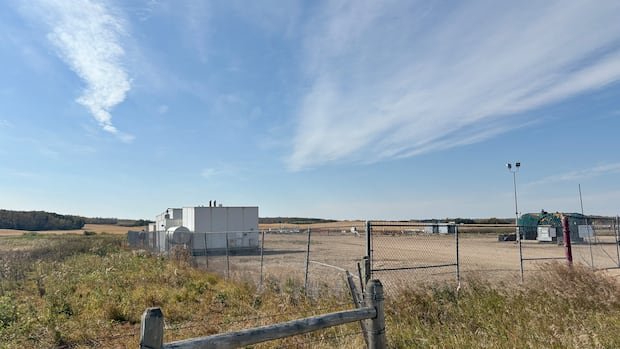

Rita Reich has welcomed over 100 of her fellow residents to her farm in Ponoka County, Alberta, in the past month to express opposition to a proposed data center nearby. “I am against having it in our farming community. I don’t believe this is the suitable location,” said Reich, a grain farmer and cattle raiser, in an interview with CBC’s West of Centre.
She expressed concerns about potential noise, environmental repercussions, and the loss of agricultural land. Polling conducted by Janet Brown Opinion Research on behalf of CBC News revealed that many Albertans share similar doubts. The study indicated that the surge in data center development in the province could risk alienating Premier Danielle Smith’s supporters.
According to the poll results, only 7% of respondents strongly support the establishment of AI data centers, while 31% are strongly against them. Additionally, 26% mostly oppose the centers but believe some should still be constructed. The resistance to data centers appears to cut across geographical and political lines.
Major concerns highlighted in the survey include the potential environmental impact, electricity expenses, noise levels, land loss, and societal implications of AI. The growing opposition coincides with Alberta’s emergence as a hub for new data center projects in Canada, leveraging abundant natural gas resources and active government efforts to attract tech companies.
If all the planned projects proceed, Alberta could potentially host 90% of the country’s data centers. At a local town hall meeting organized by the province to discuss data centers, tensions were reportedly high, with residents feeling their questions were inadequately addressed, leading to increased dissatisfaction.
Eleni Iskierski, press secretary for Alberta’s Technology Minister Nate Glubish, emphasized that the government takes citizen concerns seriously. Feedback from these town hall sessions will be utilized to establish province-wide standards for data centers.
Rita Reich, a conservative supporter, remains hopeful that the government will reconsider its stance. However, political sociologist Trevor Harrison warned that not all voters may be as forgiving, especially if decisions lead to negative outcomes without proper deliberation.
The controversy extends beyond local boundaries, with the Meta project in Sturgeon County attracting widespread attention. The project has sparked significant backlash, prompting some residents to reconsider their political affiliations due to concerns about the impact on their surroundings and lifestyle.
Sturgeon County Mayor Alanna Hnatiw acknowledged the intense community response but maintained her support for the project, citing economic benefits and the project’s location in an established industrial zone. Meta’s assurances of minimal water consumption and job creation during construction have not fully alleviated residents’ apprehensions.
Hnatiw recognized the rapid change data center development brings to rural areas with limited access to technology. The resistance is not limited to large tech companies like Meta; smaller data centers are also facing opposition.
In Ponoka County, Rita Reich and her neighbors are contesting the Sunfavor Agripower Camrose Hub data center proposal in the adjacent county. The center, if approved, would be powered by natural gas and cater to third-party bitcoin mines, with excess heat utilized for agricultural processes.
Residents have enlisted as intervenors in the Alberta Utility Commission hearing to voice their concerns. Sunfavor’s director, Relax Yi Ding, pledged to address residents’ worries and ensure transparency throughout the process.
The CBC News survey conducted on a random sample of 1,200 Albertans by Trend Research under Janet Brown Opinion Research’s guidance highlighted the prevailing sentiments regarding data centers in the region. The margin of error for the study was +/- 2.8 percentage points, ensuring a representative sample reflective of regional demographics.