
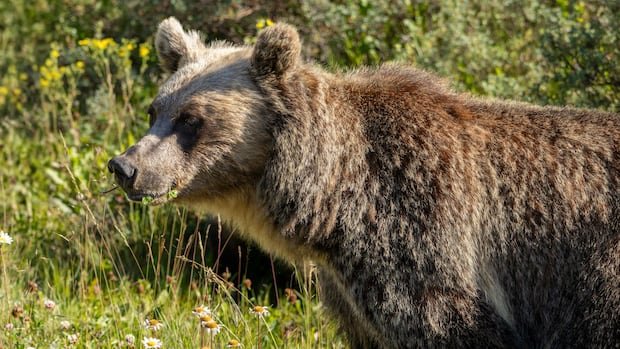

The Alberta government has reported a significant increase in the number of grizzly bears killed by hunters under its Wildlife Management Responder Network in recent months. A total of 13 grizzly bears have been killed this year, with 11 of them being taken down within the last three-and-a-half months, primarily due to livestock predation.
Since its launch in June 2024, the program has seen a total of 14 grizzly bears killed by authorized hunters, with only one bear being killed in 2025. The “problem wildlife” responders in Alberta are selected hunters who are called upon when the province deems it necessary to remove a grizzly bear to address specific situations.
In a statement to CBC News, the provincial ministry emphasized that its approach to wildlife management is science-based and focuses on public safety, conflict reduction, and grizzly bear population recovery. The province clarified that all grizzly bear deaths through the program have occurred outside designated recovery areas, in line with the Grizzly Bear Recovery Plan.
Grizzly bears were designated as a threatened species in Alberta in 2010, and their management falls under provincial guidelines that consider factors like attacks on livestock, pets, or humans. While hunting grizzlies has been banned in Alberta since 2006, exceptions are made for Indigenous hunters for subsistence or cultural purposes.
The province stressed that the removal of grizzly bears through the Wildlife Management Responder Network is not considered a hunt, as authorizations are granted on a case-by-case basis. Despite the recent increase in grizzly bear mortalities through the program, the province highlighted that the overall human-caused bear mortality in 2026 is the second lowest since 2010, indicating progress towards recovery goals.
The majority of grizzly bear killings through the program have occurred in southwestern Alberta, where the population density is highest. Effective wildlife coexistence measures are crucial in areas where grizzly bear ranges overlap with human-populated areas like ranches. The province has invested in programs to prevent conflicts between large carnivores and rural properties in southwestern Alberta, aiming to enhance coexistence and mitigate bear-related challenges.
Although the province estimates the current grizzly bear population in Alberta to be around 1,000, there hasn’t been a recent provincial population study since 2018. The government’s proactive management strategies aim to balance conservation efforts with addressing conflicts and ensuring the recovery of the threatened grizzly bear population.