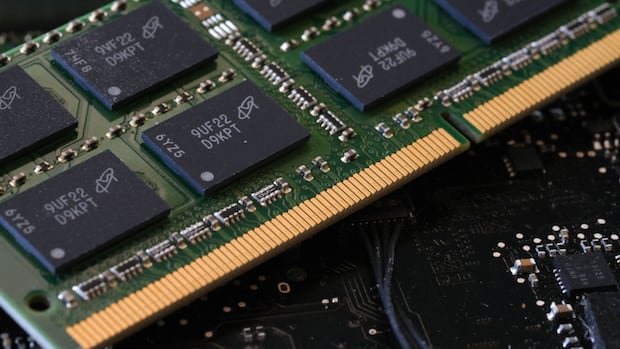

The surge in investment in artificial intelligence has caused a scarcity in the global memory chip supply, posing a significant challenge for consumer electronics companies worldwide. The shortage of random access memory (RAM), a crucial component in most modern devices, is expected to lead to price hikes and shipping delays for products ranging from laptops and smartphones to gaming consoles and automobiles.
According to Willy Shih, a professor at Harvard Business School, the substantial increase in investments in AI data centers has resulted in a high demand for memory chips, affecting the supply chain. The world’s RAM supply is predominantly manufactured by three companies: Samsung and SK Hynix from South Korea, and Micron Technology from the United States. The latter two have already sold out of high bandwidth memory chips for the remainder of the year.
Traditionally producing DRAM and flash memory for consumer electronics, these companies have now shifted their focus to high-bandwidth memory, a more profitable segment used in AI applications. The surge in AI spending has created shortages, prompting companies to expand their production capacity to meet the rising demand.
Major tech companies are bracing for the impact of the memory chip shortage. Qualcomm’s CEO, Cristiano Amon, attributed a weak second-quarter forecast to the scarcity of memory chips. Intel’s CEO, Lip-Bu Tan, warned that the shortage may persist for at least the next two years. Companies like HP and Dell have already started raising prices on their products due to the supply chain constraints.
Apple’s CEO, Tim Cook, anticipates a significant increase in market pricing for memory in the near future. While Apple is exploring various options to address the situation, analysts have differing views on how the company may respond to the rising costs associated with the shortage.
In the gaming industry, concerns are growing that major video game manufacturers may delay releases or raise prices on new consoles to mitigate the impact of the memory chip shortage. Companies are devising strategies to offset input costs, including implementing additional charges for consumers and exploring new revenue streams.
The memory chip shortage is expected to persist throughout the year, with potential long-term implications if companies need to readjust their production focus in the future. The shift towards high-bandwidth memory for AI applications poses a risk, as reverting to consumer-focused memory production would require significant time and investment in building new facilities.