
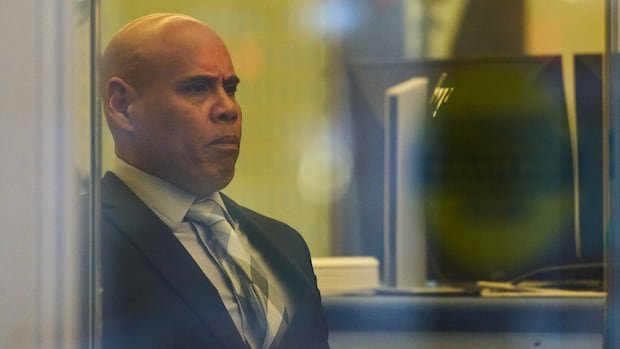

A U.S. Immigration and Customs Enforcement officer, accused of firing through a door at a Venezuelan-born man during an immigration crackdown under the Trump administration, has entered a not guilty plea to federal charges of lying to the FBI about the incident. Christian Castro, 52, faced a U.S. magistrate judge in St. Paul, Minnesota, following a six-count federal indictment related to the shooting of Julio Cesar Sosa-Celis on January 14.
Castro’s lawyer, Daniel Gerdts, refrained from commenting on the case as he left the courthouse after the hearing. Previously, Castro pleaded not guilty to state charges of second-degree assault and falsely reporting a crime in Hennepin County, Minneapolis, where the shooting occurred.
According to Hennepin County district attorney Mary Moriarty, Castro fabricated a story to justify shooting into a house with multiple occupants, resulting in a bullet penetrating a child’s bedroom wall. The accused officer allegedly misled investigators by claiming he was attacked with a broom handle and a snow shovel before using his firearm.
The shooting incident involving Castro, Sosa-Celis, and Alfredo Alejandro Aljorna, both legally in the U.S. under the temporary protected status program, led to federal charges that were later dropped. Sosa-Celis, 24, suffered a bullet wound in his thigh during the altercation.
Castro, placed on administrative leave by ICE in February, is currently suspended without pay pending the resolution of his legal matters. After the shooting, Castro fled to Texas where he was arrested on state charges. However, Texas Governor Greg Abbott refused to sign an extradition warrant, citing ongoing investigations and sparking criticism from Minnesota officials.
Despite legal battles and extradition issues, Castro voluntarily returned to Minnesota to face the charges, surrendering his passport as part of the pretrial release conditions. The fate of probes into other fatal shootings during the immigration crackdown remains uncertain, with Minnesota’s Operation Metro Surge drawing attention for its controversial handling of immigration enforcement activities.