
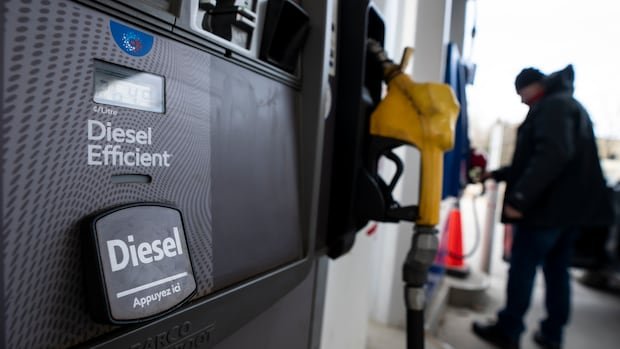

Diesel costs are surging amid global conflicts, making it expensive for Canadian truck operators to fuel their trucks that transport goods and food across the country. The Director of Government and Public Affairs at the Canadian Truck Operators Association, Tej Dulat, expressed concerns over the significant impact of rising fuel prices on the industry. While trucking companies can typically manage short-term price increases, the spike in prices since the 2022 Russia-Ukraine conflict has tightened profit margins.
Currently, diesel prices in Canada have reached $2.62 per litre, exceeding last year’s prices by over a dollar. Vancouver experienced even higher prices at $2.92 per litre, and the U.S. saw a record-high diesel price of over $6 per litre. Experts note that geopolitical conflicts are playing a significant role in driving up oil prices, overshadowing concerns about tariffs on Canadian goods.
The diesel shortage is exacerbating the situation, with net exports from the Persian Gulf dropping drastically. Russia’s ban on diesel exports and the temporary shutdown of Canada’s largest refinery in New Brunswick are further limiting supplies. To alleviate some of the cost burden, the federal government extended the suspension of the federal fuel excise tax until January 2027. However, industry analysts warn that these measures may not be sufficient to offset the rising costs.
With the ongoing U.S.-Iran conflict contributing to high oil prices, there are concerns about potential spillover effects on other goods. Energy analysts predict that diesel prices typically rise even more during winter, suggesting that Canadians may face a costly season ahead. The impact of elevated diesel prices extends throughout the food supply chain, affecting shipping, storage, and production, which could lead to increased food prices. Experts warn of a possible long-term trend of elevated food prices and express concerns about the challenges low-income Canadians may face as a result.