
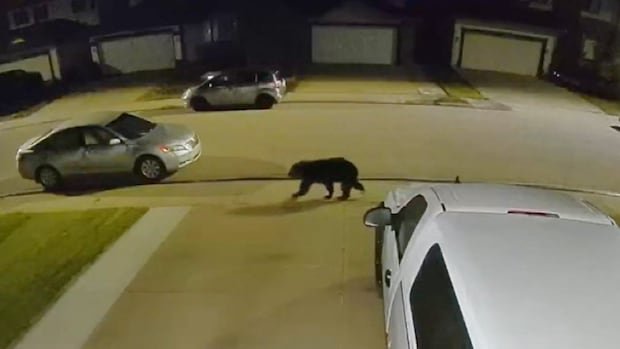

A black bear was sighted wandering the streets of northwest Edmonton, with experts suggesting the animal was likely seeking food before winter. The bear was observed moving slowly along a residential sidewalk in the Cumberland neighborhood during the night.
A local resident, Ken Turner, captured the bear on his front-door security camera around 1:30 a.m. near 138th Street and 149th Avenue and promptly reported the sighting to the authorities out of safety concerns.
Ecologist and University of Alberta professor Mark Boyce mentioned that it is not uncommon for bears to be seen in Edmonton and highlighted their ability to coexist with humans by staying hidden and moving discreetly.
Fish and Wildlife Enforcement Services acknowledged the presence of the black bear in the area following reports from Edmonton police of multiple sightings between midnight and 1:30 a.m. There were no instances of aggressive behavior or property damage reported.
During the peak feeding season for black bears, they may venture into green spaces and urban areas in search of food. Residents were advised to remove any potential attractants and report sightings to wildlife officials.
Boyce explained that Edmonton’s surroundings provide suitable bear habitats, leading them to urban areas through wildlife corridors. Alberta’s black bear population is thriving, with an estimated 40,000 bears in the province.
The bear’s incursion into the city was attributed to its hunger, as bears are in a hyperphagia stage before winter, characterized by increased feeding to accumulate fat reserves. This heightened appetite makes them less selective about food choices and more active.
Although Boyce believed the bear did not pose a significant safety risk, he cautioned that habituation to human food sources could lead to destructive behavior and potential euthanasia. Residents were advised to eliminate potential bear attractants from their properties.
John Clarke, a retired wildlife officer, emphasized that bears enter populated areas due to habitat loss and dwindling natural food sources. Managing attractants and taking proactive measures were recommended to prevent habituation and conflicts with bears.
In conclusion, community cooperation in minimizing attractants and understanding bear behavior was crucial in mitigating human-bear interactions in residential areas.