
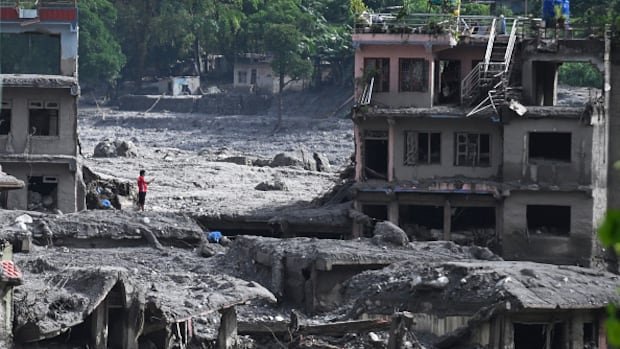

The death toll from severe flooding in Nepal and China surpassed 1,000 on Tuesday, with rescue efforts underway to reach isolated communities affected by the disaster. Nepal’s disaster agency reported 987 fatalities and 3,916 people missing, including 583 foreigners, while Chinese authorities confirmed 16 deaths and 546 individuals still unaccounted for in their most recent update.
Over 11,814 individuals have been rescued in Nepal so far, with emergency teams utilizing helicopters and aircraft to access areas cut off by destroyed roads and bridges due to floods and landslides. The catastrophe began with a series of events in the Himalayas, where a glacial collapse triggered massive floods downstream by sending rock, ice, and meltwater into lower valleys.
Satellite analysis by scientists indicated that the collapse likely resulted from the failure of bedrock beneath a glacier in the Himalayan region, causing a significant seismic event. The ensuing floodwaters inundated rivers in Tibet and Nepal, causing rapid rises and sweeping away homes, structures, and infrastructure downstream.
Efforts are ongoing to locate thousands of missing individuals, with a focus on rescuing around 900 workers, including an estimated 500 trapped inside tunnels of 12 damaged hydropower projects. Nepal’s army released visuals showing rescue teams navigating dark, debris-filled tunnels in search of survivors.
Helicopter pilot Bimal Sharma, who has been part of rescue operations since the disaster began, expressed shock at the devastation in Timure, a border town near Tibet. Sharma described the scene as drastically altered from his previous visits and noted the profound impact on the survivors he rescued, emphasizing the visible pain and heartbreak in their eyes.
Rescue teams continue their search and assistance efforts in areas where transportation routes have been severed or damaged, with a primary focus on reaching those affected by the catastrophic flooding in Nepal and China.