
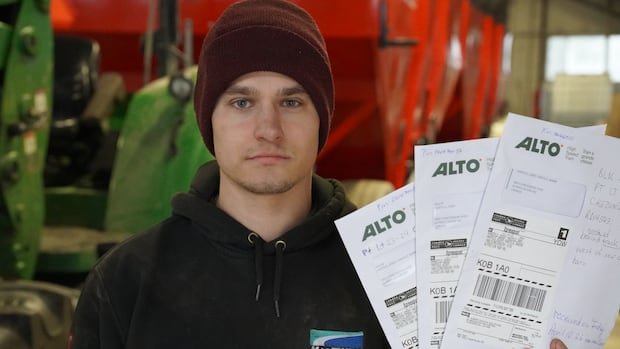

Farmers and rural landowners in the eastern Ontario region are now facing land access requests from Alto, the Crown corporation overseeing Canada’s high-speed rail line project, sparking concerns among some individuals. Marcus Haefele, a farmer with over 1,000 hectares of land near Vankleek Hill, revealed that he recently received three letters from Alto on the same day. The letters requested permission to conduct field studies on various sections of his family’s land, including a field where he recently constructed a $7 million chicken barn. The proposed access timeframe spans three years, from 8 a.m. to midnight, with a promised 48-hour notice before entry. Despite this, Haefele expressed uncertainty about the specific nature of the studies Alto intends to undertake.
The correspondence outlined a range of potential activities, from soil and vegetation sampling to drone filming and the installation of temporary monitoring equipment, according to Haefele. However, the impending planting season raises concerns for Haefele, as he deems it potentially hazardous to have individuals moving around his land at this critical time. Furthermore, he voiced apprehensions that the land surveys might hint at larger developments, including the possible expropriation of his property.
Jean Saint-Pierre, president of the Boisés Est woodlot owners association in eastern Ontario, noted that members of the association have also begun receiving similar letters from Alto, leading to distress among some individuals. Concerns primarily revolve around the environmental and economic repercussions of clearing extensive forest and farmland corridors. Saint-Pierre emphasized the significant potential impacts of such actions and highlighted the lack of clarity from Alto regarding compensation for affected landowners. Rural members, who are unlikely to utilize the high-speed rail service, feel particularly disenfranchised and fear that the land survey requests could be a prelude to land acquisition.
Despite these anxieties, Alto’s CEO Martin Imbleau assured in a recent interview that expropriation would be a last resort, with a preference for voluntary land transactions. Imbleau acknowledged the necessity of purchasing substantial land parcels for the project, potentially involving thousands of properties. However, if landowners resist selling, expropriation remains a possible recourse.
In response to inquiries, Alto clarified in a statement to CBC that the field studies are part of initial planning efforts to evaluate the environmental, economic, and health impacts of the proposed rail route. These surveys are entirely voluntary, with no studies planned without explicit permission. The corporation stressed that receiving a land access request does not automatically entail property acquisition for the project. At present, Haefele indicated his reluctance to grant access to his land for the studies.