
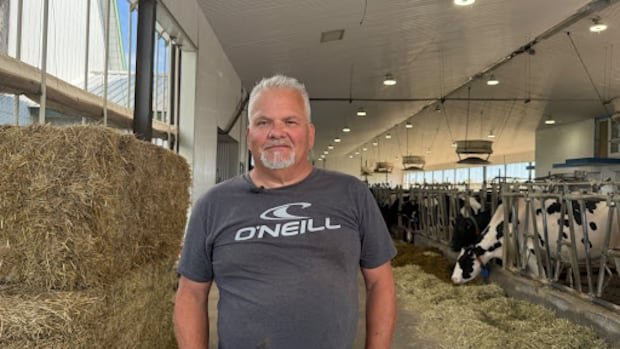

Daniel Legault, a generational farmer, has been operating Ferme Legault, a dairy and cereal farm in Rigaud, Quebec, with his family for the past three decades. The proposed high-speed rail project, known as the Alto project, poses a significant threat to his family’s farming legacy.
The potential train route could split Legault’s farm in half and hinder his access to crucial resources, such as the main road. This disruption would force him to take lengthy detours multiple times a day, impacting the efficiency of his farming operations.
The Alto project is expected to affect approximately 1,700 properties, including over 500 farms, between Ottawa and Montreal, raising concerns among local farmers. Jérémie Letellier, the president of the Fédération de l’UPA de la Montérégie, warns that the rail project could have disastrous consequences for agricultural communities in Ontario and Quebec.
Letellier criticizes the lack of transparency and consultation from Alto regarding the project’s impact on farmers. He emphasizes the need to explore alternative solutions to mitigate the adverse effects on farming businesses and property owners along the proposed train route.
Caroline Des Rosiers, a spokesperson for Alto, assures that the project is being developed diligently to minimize disruptions to agricultural communities. The company aims to limit impacts on farmland by considering existing infrastructure and implementing overpasses and underpasses where feasible.
Despite promises of fair compensation and future consultations, the uncertainty surrounding the project has left farmers like Legault feeling discouraged about the future of their longstanding farming traditions. The lack of communication and clarity from Alto has raised concerns about the viability of their farming operations in the face of the proposed high-speed rail development.