
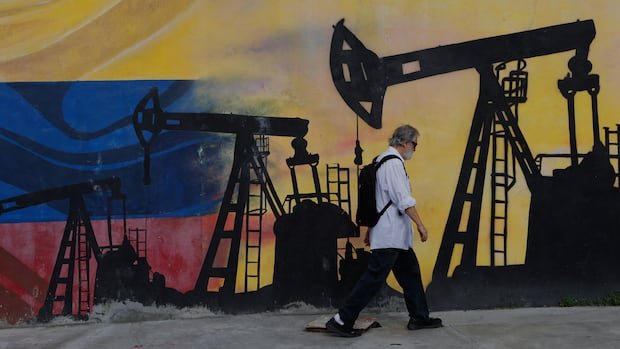

Besides a recent announcement on social media by U.S. President Donald Trump, the White House has remained tight-lipped regarding what Trump referred to as the “BIGGEST OIL DEAL IN WORLD HISTORY” in Venezuela. This deal, disclosed on Friday, is aimed at granting the United States a share in Venezuela’s extensive oil reserves, aligning with Trump’s objective of tapping into the country’s energy resources subsequent to the detainment of former president Nicolás Maduro in January.
Acting president of Venezuela, Delcy Rodríguez, characterized the agreement as a stride towards economic revitalization and the modernization of the nation’s oil sector. However, key details such as the timeline for drilling the reserves and the financial responsibilities remain unspecified, with no official documentation of the agreement released.
The pact entails the formation of a new private company by the U.S. government and an undisclosed Venezuelan entity, granting rights to undeveloped oil fields for a century. According to Rodríguez, the deal involves the development of 17 fields with a confirmed potential of 65 billion barrels, projecting an influx of $100 billion US in investments and over $209 billion US in tax revenue for Caracas.
The negotiations were reportedly led by U.S. Secretary of State Marco Rubio, Defence Secretary Pete Hegseth, and Rodríguez. Under the terms, the U.S. secures a 55% effective output from the new company, which includes ownership shares and procurement rights at cost. The purchased oil will be allocated to the U.S. strategic oil reserves and military operations, positioning the company as the second-largest corporate holder of proven reserves worldwide.
While Trump anticipates a decline in gas prices for American consumers, experts caution that the dilapidated state of Venezuela’s oil infrastructure will require extensive time and capital for restoration, dampening hopes for an immediate surge in production. The deal’s implications for Canada’s oil industry are under scrutiny as a potential increase in Venezuelan oil output could impact the competition with Canadian heavy crude in the U.S. market.
The future of the agreement remains uncertain, particularly concerning the identity of the private operator, financial commitments, and the reaction of the oil industry. Convincing major U.S. oil companies to engage in the region may pose challenges amid the political instability and infrastructural deficiencies. Notably, Chevron and Exxon Mobil have refrained from commenting on the matter, emphasizing the complexities and uncertainties surrounding the deal’s execution and its purported benefits.