
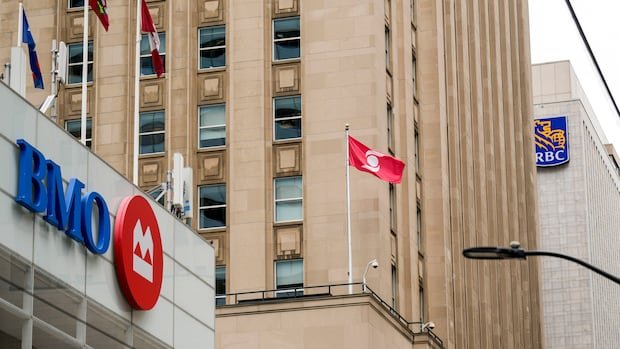

Canada’s major banks may not face direct tariff expenses, but their extensive loan portfolios, valued in the trillions of dollars, are at risk due to the economic repercussions of the ongoing trade dispute with the United States. Executives from these banks remain optimistic despite the current situation.
This week, Canada’s top financial institutions, including Bank of Montreal, Scotiabank, and National Bank, have been releasing their third-quarter financial results amid the escalating trade tensions. During post-earnings calls with analysts, executives highlighted the resilience of Canada’s economy in the face of uncertainty and praised the government’s efforts to mitigate the impact of American tariffs.
National Bank’s president, Laurent Ferreira, commended Ottawa’s support measures for businesses and workers, emphasizing that Canada is on the right path to strengthen its economic foundations. Scotiabank’s CEO, Scott Thomson, also expressed confidence in Canada’s economic fundamentals, citing job growth and fiscal capacity as positive indicators.
Although recent U.S. tariffs affect a small fraction of the banks’ total loan portfolios directly, the institutions are exposed to broader economic weaknesses through consumer products such as mortgages, auto loans, and credit cards. Despite the challenges, bank executives see opportunities for growth amidst the trade tensions.
Both Scotiabank and Bank of Montreal CEOs described the current situation as manageable and emphasized the need to address internal trade barriers within Canada. Bank of Montreal, with significant investments in the U.S., views the trade dispute as an opportunity to enhance North American competitiveness.
Looking ahead, National Bank anticipates increased lending opportunities, especially in energy and infrastructure sectors, fueled by government investments. The positive outlook has driven the stock prices of Canada’s major banks to near all-time highs on the Toronto Stock Exchange.
Analysts believe that while the Canadian banks have shown resilience so far, they are likely to face greater challenges ahead as the trade war unfolds. Despite the uncertainties, the banks remain confident in their ability to navigate the evolving economic landscape.