
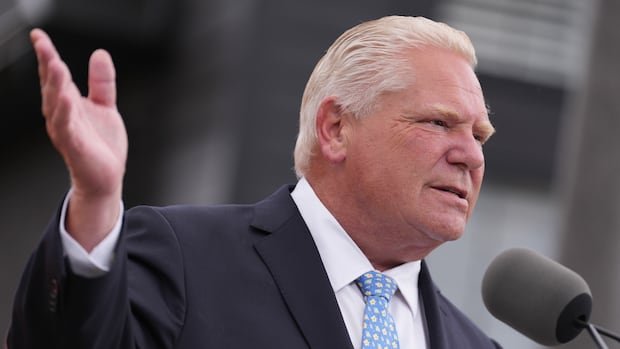

U.S. President Donald Trump has imposed 50 percent tariffs on $28 billion worth of Canadian exports following the breakdown of trade negotiations between Ottawa and Washington. Prime Minister Mark Carney instructed Canadian negotiators to return home after the U.S. side demanded too much and offered too little in a trade deal that was deemed unacceptable for Canada. Ontario Premier Doug Ford has strongly opposed the U.S. tariffs, expressing full support for the prime minister and calling for a robust response to Trump’s actions.
Canada is gearing up to retaliate with equivalent tariffs, set to take effect after Labour Day, with officials expected to announce specifics on Tuesday. As tensions rise in the trade dispute, Ontario is exploring various leverage points to counter the situation.
One strategy employed by Ontario is removing U.S. liquor from shelves, a move adopted by several Canadian provinces and territories in response to the trade conflict. This action has significantly reduced U.S. alcohol exports to Canada, prompting U.S. authorities to highlight it as a trade issue. Political science expert Anna Esselment believes this tactic has been effective and influential in Canadian negotiations with the U.S.
Additionally, Ontario has considered leveraging its power exports to the United States as a bargaining chip. Ford has previously threatened to halt electricity exports and impose surcharges on power sent to American customers. This move is seen as a critical leverage point for Ontario, although its potential consequences on U.S. reactions remain uncertain.
Despite Trump’s dominant position in Washington, Premier Ford has effectively conveyed his messages to American audiences through various media appearances. Ford’s government has actively engaged in anti-tariff campaigns, including controversial ads featuring former U.S. president Ronald Reagan. While these efforts garnered attention, their impact on negotiations has been questioned.
Ford’s vocal stance on the trade war, combined with his media presence, has attracted both support and criticism. While some experts question the utility of personal attacks in negotiations, others believe that maintaining visibility on the tariff issue could be beneficial for Canada, especially with U.S. midterm elections approaching. As discussions continue, Ford’s engagement with U.S. media outlets is expected to persist to keep the trade war in the public eye.