
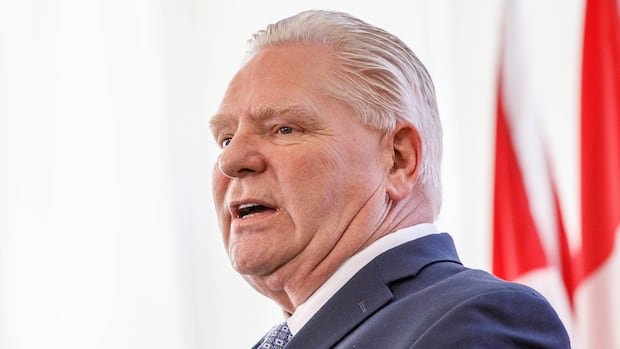

Ontario Premier Doug Ford reaffirmed his stance against U.S. President Donald Trump, using strong language by saying Trump could “kiss my ass.” This exchange of insults between the two leaders occurred as tensions heightened in the Canada-U.S. trade war following the collapse of trade negotiations over the weekend.
The trade war escalated with the implementation of 50% U.S. tariffs on approximately $28 billion worth of Canadian goods on Saturday. In response, Prime Minister Mark Carney announced retaliatory tariffs set to impact the U.S. starting on September 8.
Ford initially made the remark on a Toronto radio station, expressing defiance against Trump’s tariff threats. He later reiterated his statement at a news conference in Hamilton, emphasizing his commitment to safeguarding the jobs and incomes of Ontario workers alongside Economic Development Minister Vic Fedeli and Finance Minister Peter Bethlenfalvy.
Trump retaliated with derogatory remarks towards Ford on Truth Social during the premier’s news conference, labeling Ford and Carney as “clowns” and criticizing their leadership. Ford brushed off Trump’s comments, likening the U.S. president to a schoolyard bully and stating he won’t take advice from someone with a history of bankruptcies.
Ford hinted at potential retaliation measures, including the possibility of cutting off electricity and critical minerals to the U.S., highlighting Ontario’s significant role in supplying power to areas in neighboring states.
In a separate move, Trump announced new tariffs on Canadian automobiles, car parts, and steel, further intensifying the trade conflict. Ford expressed support for Carney’s decision to suspend trade negotiations, emphasizing the need to protect Ontario’s steel and auto sectors.
Opposition parties in Ontario, including the NDP and Liberals, urged Ford to recall the legislature to address the urgent need for relief from U.S. tariffs. They criticized Ford for what they perceived as insufficient action and demanded more concrete measures to support affected workers and businesses.
Amid the escalating tensions, Ford called for collaboration among all levels of government to navigate the economic challenges posed by the trade war. He specifically urged the federal government to provide substantial support and regulatory changes to mitigate the impact on key sectors like auto, steel, and manufacturing.
Experts, such as Daniel Tisch from the Ontario Chamber of Commerce, emphasized the importance of targeted and strategic responses to U.S. tariffs. Tisch remained optimistic about Canada’s resilience in overcoming the current trade challenges and highlighted the potential for positive outcomes through effective collaboration between businesses and government.