
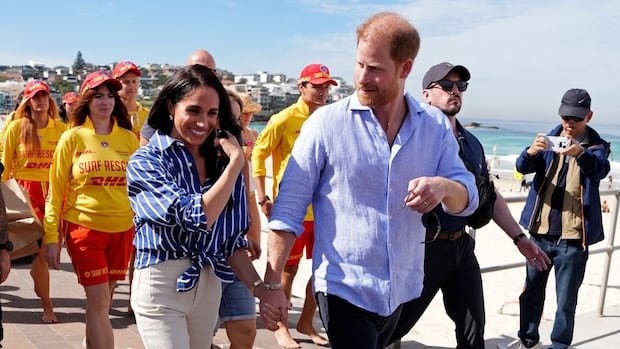

Prince Harry and Meghan Markle are set to make a return to Britain this month after a lengthy absence, re-entering a nation that has closely followed their lives from a distance for six years. Reports suggest their children, Prince Archie and Princess Lilibet, will begin school in Britain in September, with the couple planning to reside privately outside of London while maintaining their non-working royal status.
Despite facing intense media scrutiny in the past, questions now arise about whether the British tabloids’ interest in the couple will diminish upon their return. Steven Barnett, a communications professor at the University of Westminster, highlighted the polarizing coverage that Harry and Meghan have historically received in the British press, noting a tendency towards personal attacks and sensationalized reporting.
The couple’s history with the media includes controversial headlines such as the Daily Mail’s reference to Meghan’s mother as being “(almost) straight outta Compton” and The Sun’s coverage of “Harry’s girl on Pornhub,” which involved scenes from Meghan’s acting career on a pornographic website. A Guardian analysis revealed a significant discrepancy in the tone of coverage between Meghan and Kate Middleton, with Meghan receiving a much higher proportion of negative articles.
As Prince Harry and Meghan prepare to face the media spotlight once again, Royal commentator Afua Hagan emphasized their readiness for the challenges ahead, describing their return as stepping back into the “lion’s den” but with better preparation this time. Barnett also noted a potential shift in public interest towards other ongoing narratives, suggesting that the British public’s focus may have diversified since the couple’s departure.
The couple’s return coincides with a broader debate on media ethics in the UK following the recent death of Jason Arday, a Cambridge professor whose treatment by the press has raised questions about the boundaries of journalistic scrutiny and the impact of negative coverage on public figures. The parallels drawn between the media treatment of Arday and Meghan highlight ongoing concerns about diversity and representation within British media.
With Prince Harry and Meghan’s transition to non-working royal status and their relocation to California, the dynamics of their relationship with the media have evolved over time. As they navigate their return to Britain, the couple may encounter a changed media landscape and a more diverse range of narratives shaping public perceptions.