
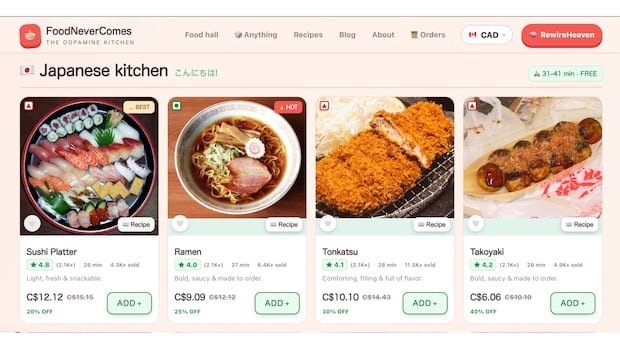

A surge in virtual shopping experiences is captivating consumers seeking the thrill of browsing and adding items to their carts without the financial commitment of making a purchase. Originating in South Korea, simulated shopping sites have gained global popularity, providing users with the satisfaction of online shopping without the actual delivery of goods.
Platforms like DopamineCart, FakeEats, DopaHaul, and FakeHaul offer a range of virtual shopping experiences, from selecting everyday items to ordering meals, replicating the familiar rituals of online shopping. For instance, FoodNeverComes, a fake food-delivery site launched in June, has garnered significant user engagement, with around 92,000 active users in the last three months.
Co-creators Anshul Sharma and Purvansh Parmar, based in India, developed the site to address compulsive spending habits, drawing on Sharma’s personal struggle with excessive food deliveries. The project aims to help users reflect on their shopping behavior and encourage them to cook at home through shared recipes.
The appeal of these mock shopping sites lies in their ability to stimulate the brain similarly to actual shopping experiences, particularly attracting budget-conscious individuals. However, the effectiveness of these sites in curbing impulsive spending depends on the user’s underlying motives. Experts caution users to be mindful of sharing personal information on such platforms and emphasize the importance of understanding one’s shopping behavior.
Incorporating environmental messages, sites like Imaginair promote conscious consumerism by encouraging users to consider the environmental impact of their shopping choices. These initiatives aim to raise awareness about overconsumption and prompt users to adopt more sustainable shopping practices, such as buying second-hand or repairing existing items.
Despite the growing popularity of virtual shopping experiences, some users are beginning to recognize the detrimental effects of their shopping habits and are actively seeking ways to consume more consciously. This shift indicates a potential path towards breaking the cycle of compulsive spending and making more intentional purchasing decisions.